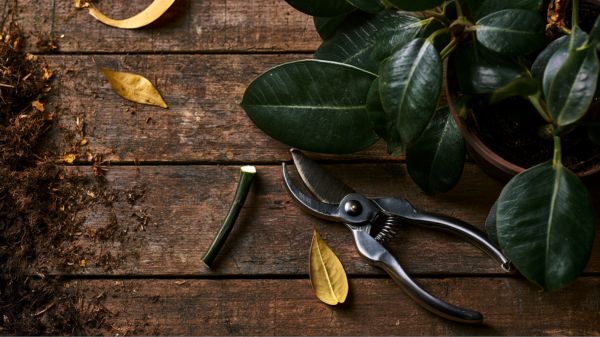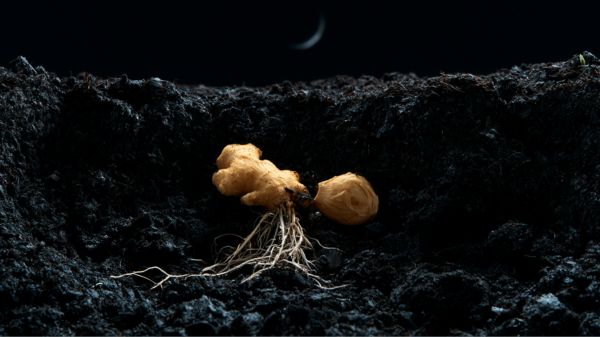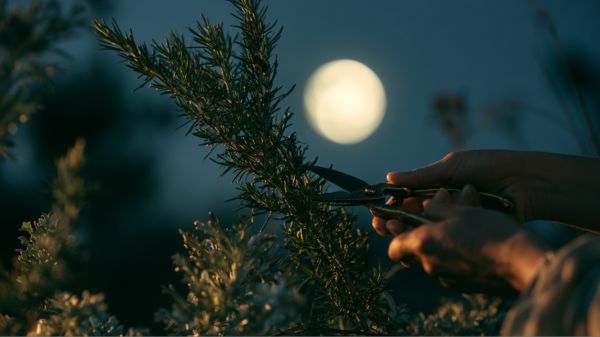
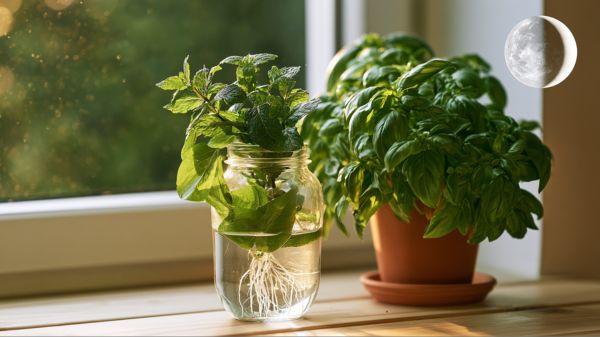

Have you ever brought a beautiful, healthy plant home from the nursery, repotted it, and then watched it sit there for months, completely stagnant and refusing to grow? While we often blame our watering habits or the lighting, the actual culprit might be the timing. If you try to force a plant to push out new leaves when its internal energy is naturally pulling downward, you are fighting an uphill battle. To get that lush, rapid, jungle-like growth, you need to align your planting and propagating with the Waxing Moon.
Watch the video above for a visual guide on propagating during the waxing moon, or keep reading for the full list of what to plant!
The Science of the Waxing Moon (The Upward Surge)
To master this phase of lunar gardening, we first need to understand the physics of what is actually happening in the sky and inside your potted plants.
The “Waxing Moon” is the approximately 14-day period that begins right after the pitch-black New Moon and steadily builds up to the bright, fully illuminated Full Moon. (A quick trick to remember: Waxing means growing, expanding, or increasing).
During this 14-day expansion, two critical environmental shifts occur:
1. The Increase of Lunar Gravity and Capillary Action
As the moon grows visibly larger in the night sky, its gravitational pull on the earth grows steadily stronger. Just as this gravity pulls the ocean tides higher onto the beach, it also pulls on the groundwater deep within the earth, drawing it closer to the topsoil.
Inside your plants, this gravitational shift creates a massive upward surge. Through a process called capillary action, moisture is actively drawn from the root system, up through the stems, and pushed into the very tips of the leaves and flowers. The plant’s internal circulatory system is essentially running at maximum capacity.
2. The Stimulation of Increasing Moonlight
While the gravitational pull moves the water, the increasing moonlight stimulates the foliage. Every single night during the Waxing Moon, the amount of light reflecting off the moon and down onto your garden (or through your living room window) increases. Plants are incredibly sensitive to these subtle light shifts. This steadily increasing nocturnal light acts as a gentle trigger, signaling to the plant that it is time to focus its energy on above-ground expansion.
What is “Rising Sap”?
When gardeners talk about “rising sap,” they are referring to the fact that the stems, vines, and leaves of the plant are becoming actively engorged with water, nutrients, and vital growth hormones.
Because all of the plant’s resources are rushing upward, this makes the Waxing Moon the absolute best time of the month to plant, repot, or propagate anything that produces its yield above the soil line.
🌕 Now you know exactly when to plant—but do you know what to plant?
Aligning with the moon is only half the magic. To truly transform your space, you need the right botanicals. Get my free eBook, The Sacred Garden, to discover 25 spiritual plants specifically chosen for healing, protection, and drawing in abundance.
👉 Click Here to Get Your Free Guide.
7 Spiritual Plants to Grow During a Waxing Moon
Because the Waxing Moon’s energy is entirely focused on upward, leafy expansion, you want to focus your gardening efforts on herbs, vines, and foliage-heavy houseplants.
If you are looking to build a high-vibe indoor jungle or a spiritual altar, here are seven powerful plants that respond beautifully when planted or propagated during this lunar phase.
1. Sweet Basil (For Wealth & Abundance)
- The Growth Habit: Basil is a fast-growing, incredibly leafy herb that relies entirely on strong, upward stem development.
- The Spiritual Energy: Spiritual practitioners have used basil for centuries in “money bowls,” simmer pots, and doorway sweeps to draw in financial abundance and good luck.
- Why the Waxing Moon: Because basil is all about the leaves, sowing basil seeds or transplanting a small basil plant during a Waxing Moon ensures rapid, bushy growth. The rising sap forces the plant to push out double the leaves, ensuring you have plenty to harvest for your wealth rituals.
2. Peppermint (For Vitality & Clear Communication)
- The Growth Habit: Mint is an aggressive, sprawling grower that sends out long runners and bright green foliage.
- The Spiritual Energy: Mint holds a bright, active, “Yang” energy that clears out sluggishness, removes energetic brain fog, and encourages open, honest communication in the home.
- Why the Waxing Moon: When you take mint cuttings and place them in water during the Waxing Moon, the stems are already flooded with natural rooting hormones. The upward flow of sap helps them push out new, bright white roots in record time, making propagation almost foolproof.
3. Golden Pothos / Devil’s Ivy (For Filtering Stagnant Energy)
- The Growth Habit: The Pothos is a trailing vine that can grow several feet in a single season if given the right conditions.
- The Spiritual Energy: The Pothos is the ultimate spiritual filter. Its broad, heart-shaped leaves act as energetic vacuums, absorbing toxic air, heavy emotional residue, and stagnation from “dead corners” in your home.
- Why the Waxing Moon: If you want your Pothos to trail down your bookshelves or climb a moss pole, the Waxing Moon is the time to give it a slight haircut. Snipping the ends of the vines right as the sap is flowing upward encourages the plant to branch out and grow exponentially thicker.
4. Rosemary (For Protection & Memory)
- The Growth Habit: Rosemary is a dense, woody herb with needle-like leaves that requires patience to grow.
- **The Spiritual Energy: A powerful spiritual ward against negative influences, Rosemary is traditionally hung above doorways or burned in smudge bundles to protect the peace of a household.
- Why the Waxing Moon: Woody herbs can be notoriously stubborn to grow from cuttings. Taking your rosemary cuttings during the second quarter of the Waxing Moon (just a few days before the Full Moon) ensures the woody stems are completely saturated with moisture, significantly increasing your chances of successful propagation without the stem drying out.
5. Lavender (For Peace & Deep Calming)
- The Growth Habit: An aromatic shrub that produces long wands of delicate purple flowers.
- The Spiritual Energy: Known for the terpene Linalool, which physically lowers stress and anxiety when inhaled, Lavender is an absolute staple for bedroom peace altars and relaxation rituals.
- Why the Waxing Moon: Sowing lavender seeds or planting a nursery transplant during the Waxing Moon utilizes the increasing moonlight to encourage strong, above-ground stem development. It builds a robust framework of leaves so the plant has the energy to push out massive flower blooms later in the season.
6. Monstera Deliciosa (For Expansion and Personal Growth)
- The Growth Habit: A massive, tropical houseplant famous for its large, fenestrated (split) leaves.
- The Spiritual Energy: Because of its dramatic size and rapid expansion, the Monstera is used in High-Vibe interior design to represent personal growth, expanding your horizons, and taking up rightful space in the world.
- Why the Waxing Moon: Monstera leaves require a massive amount of water pressure (turgor pressure) to unfurl properly. Watering and feeding a Monstera during the Waxing Moon ensures the rising sap pushes enough moisture into the new nodes, resulting in larger leaves with more dramatic splits.
7. The Jade Plant (For Financial Steadiness)
- The Growth Habit: A succulent with thick, woody stems and plump, coin-shaped green leaves.
- The Spiritual Energy: In Feng Shui, the Jade plant is the ultimate “Money Plant.” Its round leaves represent stored wealth, accumulating coins, and steady, reliable financial growth.
- Why the Waxing Moon: While you must be careful not to overwater succulents, taking a leaf cutting of a Jade plant during the Waxing Moon ensures the leaf is plump and fully hydrated. This gives the cutting the maximum amount of stored energy needed to push out a new baby rosette on the propagation tray.
Essential Waxing Moon Tasks (Beyond Just Planting)
Planting seeds and buying new houseplants aren’t the only things you should be doing while the sap is rising! Take advantage of this active, vibrant energy phase by focusing your gardening routine on the following maintenance tasks:
Propagation and Stem Cuttings
As mentioned with the mint and rosemary, stems are bursting with active growth hormones and water right now. If you want to multiply your houseplants for free, this is the time to do it.
When you snip a vine (like a Philodendron or Ivy) during a Waxing Moon and place it in a jar of water, the cutting is far less likely to rot. It has enough internal water pressure to survive the shock of being cut, and it will redirect that rising energy into pushing out new root nodes.
Fertilizing Your Houseplants
Plants are incredibly thirsty and hungry during this two-week window. Because they are actively drawing moisture upward into their leaves to support new growth, their root systems are working in overdrive.
This is the ideal time to apply a liquid organic fertilizer, kelp extract, or top-dress your pots with rich compost. The active upward pull will soak those nutrients right up and transport them directly into new leaf production. If you fertilize during a Waning Moon (when the plant is resting), the nutrients often just wash out the bottom of the pot or build up as toxic salts in the soil.
Up-Potting (Moving to a Larger Pot)
While major root pruning or aggressive repotting is best left for the resting phase of the Waning Moon, up-potting (simply sliding a rootbound plant out of its pot and placing it into a slightly larger one with fresh soil) works beautifully during the Waxing Moon. The plant is in a vigorous growth phase, meaning the roots will immediately begin expanding into the new, nutrient-rich soil to support the leafy canopy above.
What NOT to Do During a Waxing Moon
To truly work with lunar energy, you have to know when to hold back. Because all the plant’s energy is surging upward into the leaves, the Waxing Moon is a terrible time for the following tasks:
- Do not plant root crops: Carrots, potatoes, onions, garlic, and ginger will struggle. The rising energy will cause them to grow massive, bushy green tops, but the actual roots (the part you want to harvest) will end up small, stunted, and weak.
- Do not do heavy structural pruning: If you chop off a massive branch of a tree or heavily cut back a thick houseplant now, the plant will “bleed” excess sap. It loses vital moisture and takes significantly longer to heal the wound, which can invite pests or fungal diseases. Save your heavy pruning for the Waning Moon.
Do not pull weeds: If you pull a weed now, the active growth hormones left in any tiny root fragments will cause the weed to aggressively sprout right back up.
Frequently Asked Questions (FAQs)
Can I plant seeds from the grocery store during a waxing moon?
Yes! If you buy organic herbs (like basil or cilantro) from the produce section, you can often root the stems in water. Doing this during the Waxing Moon gives you the highest chance of success. Similarly, planting seeds extracted from grocery store fruits (like lemons or peppers) during this phase will yield strong, leafy seedlings.
What if I miss the exact window? How many days do I have?
The Waxing Moon is not a single day; it is a two-week period. The energy is lowest right after the New Moon and highest right before the Full Moon. The “sweet spot” for maximum leafy growth is the Second Quarter—the 7 days leading directly up to the Full Moon. As long as the moon is visibly growing larger in the sky, you are in the clear!
Does this apply to hydroponic or water-propagated plants?
Absolutely. Lunar gravity affects water regardless of whether it is trapped in soil or sitting in a glass jar. Plants growing in hydroponic setups are often more responsive to lunar cycles because they have direct, unrestricted access to moisture.
What is the difference between the first quarter and second quarter moon for gardening?
The First Quarter (the week immediately following the New Moon) has rising sap, but the moonlight is still relatively low. This is great for leafy crops that don’t produce seeds (like lettuce or spinach). The Second Quarter (the week right before the Full Moon) has peak sap flow and high moonlight, making it the best time for plants that produce fruit or seeds above ground (like tomatoes, beans, or flowering spiritual herbs).
Ride the Cosmic Wave of Growth
Stop trying to force your plants to grow on your own rigid schedule. Gardening, whether in a massive backyard or on a tiny apartment windowsill, is a partnership with nature.
By waiting for the Waxing Moon to do your planting, propagating, and feeding, you are essentially catching a cosmic wave. You let the natural physics of the earth and the moon do the heavy lifting for you, resulting in a vibrant, high-vibe indoor jungle that practically grows itself.
Ready to start planting but need to know exactly which botanicals hold the best energy for your home? Pair your new moon gardening skills with the most spiritually potent plants on earth. Download my free eBook, The Sacred Garden: 25 Spiritual Plants, right here.