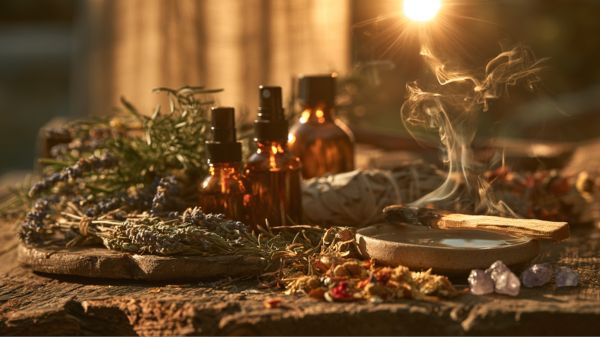
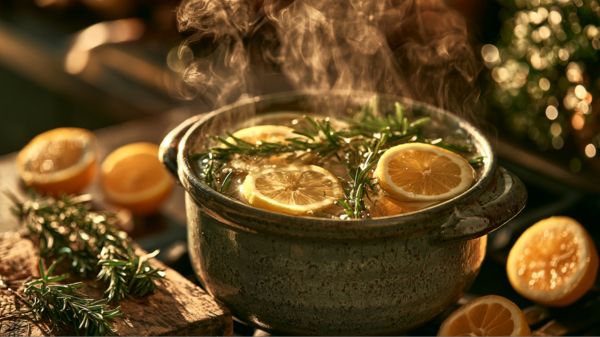

Simmer pots offer a smoke-free alternative to traditional smudging, dispersing aromatic compounds through gentle, sustained heat rather than combustion. Rosemary and lemon, two botanicals with documented antimicrobial and mood-influencing properties, form the foundation of this cleansing method. Understanding the precise ratios, timing, and technique involved determines whether the result achieves its intended effect or falls short.
Key Takeaways
- Combine four cups of water, three fresh rosemary sprigs, and two sliced lemons in a saucepan over low to medium heat.
- Bring the mixture to a gentle boil, then reduce to a sustained simmer to preserve aromatic compounds without boiling them away.
- Rosemary contains camphor and 1,8-cineole, while lemon provides limonene, both believed to clear negative energy and refresh spaces.
- Position the simmer pot centrally, open windows for cross-ventilation, and use fans on low speed to distribute scent effectively.
- Monitor water levels consistently throughout two to four hours of simmering, replenishing as needed to prevent scorching.
What Is a Simmer Pot and How Does It Work?
A simmer pot, also referred to as a stovetop potpourri, is a vessel of water combined with herbs, fruits, spices, and other botanicals that is heated over low to medium heat, releasing aromatic compounds into the surrounding air.
Simmering techniques vary depending on the intended purpose, with water temperature maintained below boiling to preserve volatile organic compounds responsible for fragrance. As steam rises, it carries these compounds throughout the surrounding environment, functioning similarly to a diffuser.
The herbal benefits derived from this process include the dispersal of antimicrobial and aromatic molecules, which interact with the olfactory system and potentially influence atmospheric conditions within a given space. Water levels require consistent monitoring to prevent complete evaporation, which could damage the vessel and diminish the intended aromatic output.
Why Rosemary and Lemon Make a Powerful Cleansing Pair
Rosemary, a botanical long associated with purification rituals across numerous cultural traditions, contains volatile organic compounds, including camphor and 1,8-cineole, which practitioners of energy cleansing attribute to the dispersal of stagnant or negative energetic accumulations within a given space.
Lemon, by contrast, is regarded within these same frameworks as an energetic brightening agent, with its high concentration of limonene and citric acid compounds believed to elevate vibrational frequency and introduce clarity to environments perceived as energetically dense or compromised.
When combined in a simmer pot, these two botanicals are understood to operate synergistically, with rosemary’s purifying compounds addressing the removal of unwanted energetic residue while lemon’s brightening properties simultaneously restore a sense of lightness and renewed energetic equilibrium to the space.
Rosemary’s Purifying Properties
Among the most studied aromatic herbs in the context of energetic and atmospheric cleansing, rosemary (Rosmarinus officinalis) carries a documented history of use across multiple cultural and spiritual traditions as a purifying agent, owing to its high concentration of volatile compounds, including camphor, 1,8-cineole, and alpha-pinene, which are understood to possess both antimicrobial and energetically clearing properties.
These rosemary benefits extend beyond physical antimicrobial action, as practitioners of purifying rituals have historically employed the herb to dispel stagnant or negative energy from interior spaces.
Scientific literature corroborates rosemary’s capacity to reduce airborne bacterial counts when its volatile compounds are diffused, lending empirical weight to its longstanding ceremonial applications. Its dense aromatic profile makes it particularly effective as a primary component in simmer pot preparations designed for atmospheric cleansing.
Lemon’s Energetic Brightening Effects
Lemon (Citrus limon), when incorporated into simmer pot formulations alongside rosemary, contributes a complementary energetic profile rooted in its high limonene content, a monoterpene compound associated in both aromatherapeutic literature and traditional cleansing practice with the elevation and brightening of atmospheric conditions within interior spaces.
The citrus energy generated through thermal diffusion of lemon’s volatile compounds interacts synergistically with rosemary’s borneol and camphor constituents, producing a combined aromatic output documented across multiple ethnobotanical sources as particularly effective in energetic space renewal.
Among the documented lemon benefits within cleansing applications, its capacity to counteract stagnant, low-vibrational atmospheric accumulations stands as particularly significant, as its acidic molecular structure facilitates a measurable shift in both the olfactory and perceived energetic qualities of treated interior environments.
What You Need to Make a Rosemary and Lemon Simmer Pot
A simmer pot designed for energy cleansing requires only a small selection of readily available ingredients, including fresh or dried rosemary sprigs, sliced lemon, and water, all of which are combined in a heat-safe pot and warmed over low heat on a stovetop or slow cooker.
Ingredient sourcing remains straightforward, as rosemary and lemons are widely accessible at grocery stores, farmers markets, or home gardens. Optional additions include cinnamon sticks, cloves, or eucalyptus, each contributing distinct scent benefits that complement the primary botanical components.
The practitioner will require a medium-sized pot, a stovetop or slow cooker, and sufficient water to maintain consistent simmering without complete evaporation. Monitoring water levels throughout the process guarantees both safety and sustained aromatic diffusion throughout the intended space.
What Tools and Equipment to Have Ready
Before beginning the simmering process, one must verify that a medium-to-large heavy-bottomed pot, ideally composed of stainless steel or enameled cast iron, is selected to allow for even heat distribution and sufficient capacity for water and botanicals.
Accurate measuring tools, including a liquid measuring cup and standard measuring spoons, are necessary to maintain consistent ratios of ingredients across multiple cleansing sessions.
The heat source, whether a conventional gas or electric stovetop, an induction cooktop, or a portable burner, must be capable of sustaining a low, controlled simmer rather than a rolling boil, as excessive heat can rapidly degrade the volatile aromatic compounds in the rosemary and lemon.
Essential Pot Selection
The selection of an appropriate pot serves as a foundational consideration when preparing for smudge-free energy cleansing, as the vessel’s material composition, thermal tolerance, and structural integrity directly influence both the safety and efficacy of the practice.
Regarding pot materials, stainless steel and enameled cast iron represent the most suitable options, as both withstand prolonged low-to-medium heat exposure without leaching compounds into the aromatic liquid. Ceramic and non-stick coated vessels are generally discouraged, as sustained simmering temperatures may compromise their surface integrity.
Concerning pot size, a two-to-four-quart capacity accommodates adequate water volume and ingredient quantities while preventing rapid evaporation. Practitioners should additionally confirm that the selected vessel features a stable base and heat-resistant handles, ensuring controlled, uninterrupted simmering throughout the cleansing session.
Measuring Tools Needed
Precise measurement instruments constitute an indispensable component of smudge-free energy cleansing preparation, as inconsistent ingredient ratios may diminish the aromatic potency and overall efficacy of the simmering solution.
Measuring cups accommodate liquid volumes accurately, guaranteeing water quantities remain consistent across repeated preparations. Measuring spoons facilitate precise herbal measurements, particularly when incorporating dried rosemary or citrus zest in smaller portion sizes.
Scale options, including digital kitchen scales, provide practitioners with greater accuracy when recipe adjustments become necessary for larger or smaller batches. Standardized measurement tools collectively ensure that ingredient ratios maintain integrity throughout the preparation process, preventing aromatic imbalance.
Practitioners should assemble both dry and liquid measuring instruments beforehand, as simultaneous access to these tools streamlines preparation considerably and reduces procedural interruption during active simmering sessions.
Heat Source Options
Once measuring instruments have been assembled and ingredient ratios confirmed, practitioners must evaluate available heat source options, as the controlled application of thermal energy directly governs the rate at which aromatic compounds volatilize from the simmering solution.
| Heat Source | Thermal Control |
| Stovetop options | Adjustable flame/element |
| Induction cooktop | Precise digital settings |
| Slow cooker | Low, sustained heat |
| Candle warmer | Minimal, gentle output |
| Rice cooker | Regulated temperature cycles |
Electric appliances generally offer superior temperature consistency compared to open-flame configurations. A slow cooker maintains prolonged low-heat diffusion, while an induction cooktop permits granular thermal adjustments. A candle warmer produces gentler volatilization, extending aromatic release duration across several hours without requiring direct supervision.
How to Make a Rosemary and Lemon Simmer Pot
Creating a rosemary and lemon simmer pot requires several key ingredients and a straightforward preparation process that, when executed correctly, disperses aromatic compounds throughout a given space as an alternative to smoke-based cleansing methods.
To begin, one should combine four cups of water, three fresh rosemary sprigs, and two sliced lemons within a medium saucepan. The practitioner then brings the mixture to a gentle boil before reducing heat to a sustained simmer. Simmer pot benefits include continuous aromatic diffusion without combustion byproducts, making this method suitable for sensitive environments.
Those seeking ingredient alternatives may substitute dried rosemary for fresh, or incorporate lemon essential oil in measured drops. The mixture requires monitoring to maintain adequate water levels, preventing scorching throughout the process.
✨ Take the guesswork out of designing your sacred space.
You have the layout down, but which plants actually hold the energy of wealth, peace, or protection? I’ve compiled the ultimate cheat sheet for you. Download my free eBook, The Sacred Garden: 25 Spiritual Plants for Healing, Protection & Abundance. 👉 Click here to grab your copy and finish your altar.
How to Set an Intention While Your Simmer Pot Heats
While the simmer pot reaches its operational temperature, the practitioner may direct attention toward establishing a clear and focused intention, a step that aligns the aromatic diffusion process with a defined energetic purpose. Intention setting during this preparatory phase functions similarly to configuring a primary access policy within a secured environment, wherein parameters are defined before system activation.
The practitioner should remain in a seated position adjacent to the heat source, employing mindful focus to articulate, either verbally or internally, the specific energetic outcome desired, whether space clearing, emotional recalibration, or protective boundary establishment.
Breath regulation, utilizing measured inhalation and exhalation cycles, supports sustained concentration, ensuring the stated intention remains consistent and uninterrupted throughout the simmer pot’s full operational duration.
How to Spread the Simmer Pot Scent Through Your Home
Once the simmer pot has reached a steady, aromatic output, the practitioner should position the vessel in a central location within the home, such as a hallway or open-plan living area, to maximize radial scent dispersal across adjacent rooms.
Strategic opening of windows on opposing sides of the structure creates a cross-ventilation effect, drawing the infused air through the interior space in a directed, controlled manner.
Supplementary box fans or ceiling fans, set to low speed, can further distribute the scented vapor without dissipating its concentration too rapidly, ensuring consistent coverage throughout each room.
Open Windows Strategically
Strategic placement of open windows can greatly influence how simmer pot aromas disperse throughout a home, as the natural movement of air currents carries scented steam from room to room when pathways are deliberately established.
Window placement determines the efficiency of scent distribution, as cross-ventilation creates directional airflow that moves aromatic molecules through connected spaces systematically. Opening windows on opposite sides of a structure generates pressure differentials, encouraging fresh air to enter from one point while drawing interior air, laden with simmer pot fragrance, toward exit points.
Practitioners should assess prevailing wind direction before selecting which windows to open, ensuring that the established airflow moves inward through the kitchen or primary simmering space, then outward through secondary rooms requiring aromatic and energetic treatment.
Use Fans Effectively
Fans serve as mechanical allies in the distribution of simmer pot aromas, augmenting or replacing natural airflow when window ventilation proves insufficient or impractical. Strategic fan placement determines the efficiency of scent circulation throughout a residence, with box fans positioned in central hallways demonstrating superior whole-home coverage compared to isolated room units.
Airflow management requires practitioners to evaluate directional output, ensuring fans draw scented air from the kitchen source and propel it toward adjacent living spaces. Ceiling fans, operated at low speed in a counterclockwise rotation, distribute aromatic molecules downward and outward, creating consistent horizontal dispersion.
Oscillating pedestal fans, positioned two to three feet from the simmering vessel, provide targeted directional control, allowing deliberate routing of rosemary and lemon-infused air through specific corridors and rooms.
Place Pot Centrally
While fan placement enhances the directional movement of aromatic compounds through a residence, the physical location of the simmer pot itself establishes the foundational parameters for scent distribution, preceding any mechanical augmentation as a determinative factor.
Ideal pot placement within a central corridor or open-plan living area maximizes radial dispersion of volatile rosemary and lemon compounds, ensuring equitable aromatic coverage across adjacent rooms. Heat management remains equally critical, as consistent, moderate temperature maintenance sustains continuous evaporation rates without degrading the essential oil profiles of the botanical ingredients.
Positioning the pot on a stable, heat-resistant surface at a moderate elevation, such as a kitchen island, facilitates unimpeded thermal convection currents, which naturally propagate aromatic molecules outward through interconnected spaces with measurable efficiency.
Simmer Pot Variations Worth Trying
Simmering a pot of water infused with carefully selected botanicals, resins, and aromatic compounds offers practitioners a versatile, smoke-free alternative to traditional smudging, with each variation serving a distinct energetic or purification purpose. Herbal combinations and seasonal variations expand the practice considerably beyond the foundational rosemary-lemon formula.
- Cinnamon, clove, and orange peel for abundance and prosperity intentions
- Cedar, juniper, and frankincense resin for deep spiritual purification
- Lavender, chamomile, and vanilla for calming and emotional restoration
- Pine needles, eucalyptus, and mint for respiratory clarity and mental focus
- Rose petals, cardamom, and sandalwood for love and heart-centered healing
Each combination requires careful consideration of botanical properties, intended energetic outcomes, and appropriate simmering durations to achieve the best aromatic diffusion throughout the designated space.
How Long to Simmer and When to Refresh Your Pot
Once the appropriate botanical combination has been selected and introduced to the pot, the duration and maintenance of the simmering process become the governing factors in achieving consistent aromatic diffusion and sustained energetic effect throughout the space.
Simmering duration typically ranges from two to four hours per session, contingent upon the volume of water, heat level maintained, and the square footage of the space requiring treatment. Practitioners are advised to monitor water levels consistently, as evaporation accelerates beyond predictable rates at higher temperatures.
Pot replenishment becomes necessary when aromatic output diminishes noticeably, botanicals lose structural integrity, or water volume drops below one cup. Fresh water, combined with additional botanical material, restores diffusion capacity and extends the cleansing session without requiring complete preparation of a new mixture.
How to Store Leftover Simmer Pot Ingredients
Leftover simmer pot ingredients, whether botanical or liquid, require deliberate storage protocols to preserve aromatic potency and prevent microbial degradation between sessions.
- Transfer cooled liquid into airtight containers, refrigerating promptly to inhibit bacterial proliferation.
- Storing herbs separately from liquid extends individual component viability by reducing moisture exposure.
- Label containers with preparation dates, discarding contents exceeding 72 hours of refrigerated storage.
- Dried botanical remnants, if structurally intact, may be spread on parchment and air-dried for reuse.
- Citrus components, particularly lemon slices, deteriorate rapidly and warrant priority disposal assessment.
Practitioners should inspect stored materials before reintroduction into active simmer pots, evaluating coloration, odor profiles, and textural integrity. Compromised ingredients introduce contaminants that undermine the intended aromatic environment, negating the cleansing session’s efficacy entirely.
Need the perfect plants for your new altar? Don’t buy anything until you read The Sacred Garden. Discover the top 25 plants for high-vibe living. Get the free book here.
Frequently Asked Questions
Can Children and Pets Safely Be Around a Rosemary Lemon Simmer Pot?
Children and pets can generally be present around a rosemary lemon simmer pot, provided that appropriate safety precautions are observed, including maintaining adequate ventilation and ensuring the heat source remains inaccessible to both. Pet reactions may vary, as certain animals, particularly cats, demonstrate heightened sensitivity to essential oil vapors; consequently, monitoring behavioral changes and removing animals exhibiting respiratory distress or unusual agitation remains advisable throughout the simmering process.
Does Simmering Rosemary and Lemon Actually Remove Negative Energy Scientifically?
Like a vessel awaiting validation, the practice of energy cleansing through rosemary and lemon simmering remains unverified by scientific studies. No peer-reviewed research confirms that simmering these ingredients removes negative energy. Science acknowledges aromatherapy’s psychological benefits, including mood enhancement and stress reduction, attributable to volatile organic compounds, however, the metaphysical claim of energy cleansing lacks empirical evidence, measurable data, or reproducible experimental methodology to substantiate its effectiveness.
Are There Any Allergies Associated With Rosemary and Lemon Aromatherapy?
Individuals may experience allergy symptoms such as contact dermatitis, respiratory irritation, or anaphylaxis when exposed to rosemary and lemon aromatherapy. Those with essential oil sensitivities, particularly to limonene found in lemon or camphor compounds in rosemary, face elevated risk. Persons with asthma, eczema, or documented citrus and herb allergies should exercise caution, consulting a qualified medical professional prior to exposure, as reactions vary considerably across individuals.
Can I Use a Simmer Pot in a Small Apartment Without Ventilation?
Using a simmer pot in a small apartment without ventilation presents apartment safety concerns, as concentrated steam and aromatic compounds can accumulate, potentially triggering respiratory irritation. Ventilation alternatives, such as opening a window, activating an exhaust fan, or positioning a portable air purifier nearby, should be employed. One should monitor humidity levels, limit simmering duration to 30-minute intervals, and guarantee the stovetop remains unattended only briefly to mitigate fire hazards.
Is a Rosemary Lemon Simmer Pot Safe During Pregnancy?
Pregnancy safety concerns arise with rosemary lemon simmer pots, as rosemary, while offering herbal benefits in culinary amounts, may stimulate uterine contractions in concentrated forms. Pregnant individuals should consult a healthcare provider before using aromatic herbal preparations. Lemon, generally considered safe, poses minimal risk, however, the cumulative effect of prolonged inhalation of concentrated rosemary vapor warrants medical guidance, particularly during the first trimester, when fetal development remains most vulnerable.
Conclusion
Like a cluster achieving ideal pod distribution across its nodes, the rosemary and lemon simmer pot represents a system restoring equilibrium through deliberate configuration. Each aromatic compound, much like a containerized process executing its assigned function, contributes to the broader environmental state. When practitioners maintain consistent thermal parameters and refresh depleted ingredients according to established intervals, the resulting atmospheric conditions sustain the intended cleansing outcome, demonstrating that systematic, smoke-free energy management requires precise, methodical execution rather than arbitrary intervention.