
Take a look around your living room, bedroom, or home office. As you scan the layout, do your eyes catch on a harsh, empty corner? Is there an awkward space behind a door that just collects dust? Or perhaps a sharp architectural pillar that seems to jut out aggressively into the middle of the room?
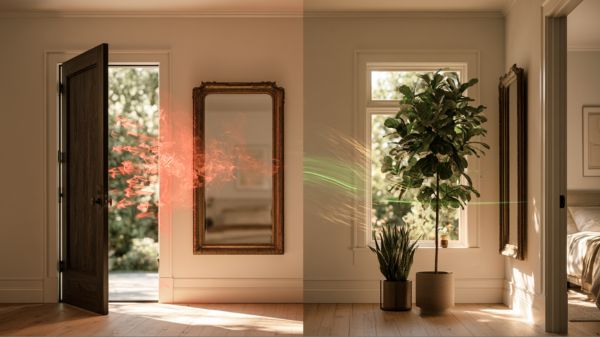
In modern interior design, these awkward spaces are often ignored or hastily filled with a stray chair or a stack of boxes. But in energetic practices like Feng Shui and holistic space clearing, these are known as “dead zones,” sources of stagnation, or generators of “Shar Chi” (poison arrows).
These stagnant areas are not just visual eyesores—they can literally trap negative, heavy energy, making an entire room feel chaotic, exhausting, or simply uninviting. When the energy of a room is stuck, you might find yourself avoiding that space entirely without even realizing why.
Fortunately, you don’t need to hire a contractor for a major remodel, and you don’t need to completely rearrange your heavy furniture to fix them. You just need to harness the upward, circulating, living energy of tall houseplants.
The Anatomy of Chi: How Energy Moves in Your Home
To understand how to fix a dead energy corner, we first need to understand how energy moves. In Feng Shui, life force energy is known as Chi (or Qi).
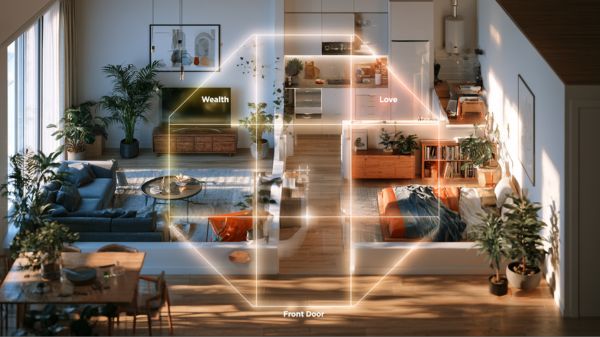
Imagine Chi as a gentle, continuously flowing river or a soft breeze that enters through your front door (the “Mouth of Chi”) and meanders through your hallways and rooms. For a home to feel “high-vibe,” peaceful, and abundant, this river of energy needs to flow smoothly. It shouldn’t rush too quickly, nor should it pool and become stagnant.
When the layout of a room includes deep, empty corners, dark recesses, or sharp angles pointing directly at resting areas (like a bed, a desk, or a sofa), that gentle flow is violently disrupted.
The Two Main Types of Energetic Disruption
When evaluating your home, there are two primary types of disruptions you need to look out for:
- Stagnation (Dead Zones). Energy gets trapped in deep, empty corners, alcoves, or long, dark hallways where air, light, and foot traffic rarely circulate. Think of a pond that has no inlet or outlet; over time, the water becomes murky and heavy. Stagnant corners work the same way. They hoard heavy emotional residue, stress, and lethargy. If you have a room that always feels “depressing” or heavy no matter how much you clean it, you likely have a stagnation problem.
- Poison Arrows (Shar Chi). Shar Chi translates directly to “killing energy” or “cutting energy.” This occurs when sharp corners—like the edge of a square architectural pillar, a protruding wall, or a large, sharp bookshelf—create harsh, 90-degree angles. These angles act like energetic blades, aggressively pushing energy outward in a straight line. If these “poison arrows” point directly at the chair where you work or the bed where you sleep, they can cause subconscious stress, insomnia, irritability, and a feeling of being constantly on edge.
🌿 Want to bring more high-vibe energy into your home?
If you love learning how to manipulate the energy of your space using nature, you’ll love my free guide. Discover the exact plants you need for love, wealth, and spiritual shielding in The Sacred Garden: 25 Spiritual Plants for Healing, Protection & Abundance. 👉 Click here to download your free copy now.
How to Identify a “Dead Corner” in Your Space
Before we can cure the energy, we need to diagnose it. Walk through your home and look for these common architectural culprits:
- The “L-Shaped” Room Corner: The deep inner corner of an L-shaped room is notorious for trapping energy because movement naturally bypasses it.
- Behind Open Doors: The space sandwiched between an open door and the wall behind it is almost always a dead zone, gathering physical dust and energetic stagnation.
- Under Staircases: The sloped area beneath a staircase often creates a heavy, oppressive energy zone, especially if left empty or cluttered with junk.
- Protruding Pillars: Structural support columns right in the middle of a room or basement create four distinct “poison arrows” pointing in every direction.
- The Lonely Corner: Any corner that is heavily shadowed, far away from windows, and lacks furniture or intention.
Why Fake Plants, Lamps, and Furniture Don’t Work
A common interior design reaction to an empty corner is to put a floor lamp, a small end table, or a high-quality artificial plant in the space. While this solves the visual emptiness, it does absolutely nothing for the energetic stagnation.
Inanimate objects do not breathe. They do not possess an active aura, nor do they have an internal flow of moisture and life force to actively move energy. A floor lamp might add light, but when it is turned off, the corner dies again. A fake plant might look green, but energetically, it is completely silent.
To fix a living space, you need a living cure.
Why Tall Houseplants are the Ultimate Energetic Fix
Living, tall houseplants are the ultimate holistic fix for dead corners because they act as organic, energetic fountains. When you place a healthy plant in a stagnant space, several incredible things happen at once:
- The Upward Draw: The roots of the plant ground the energy into the earth, while the active, upward growth of the stems and leaves literally draws heavy, stagnant energy up from the floorboards, filtering it and circulating it back into the room.
- Biophilic Air Circulation: Through the process of transpiration (water moving from the roots, up the stem, and evaporating from the leaves), plants create micro-currents of air movement. This physically breaks up stagnant air.
- Softening Shar Chi: Nature rarely creates perfect 90-degree angles. The soft, organic, sweeping shapes of plant leaves instantly diffuse the harsh “poison arrows” created by sharp architectural corners, turning a cutting energy blade into a soft, meandering stream.
The 7 Best Tall Plants for Stagnant Spaces
When choosing a plant to fix a dead corner, height and leaf shape are your most important factors. You need a plant that reaches upward to lift the energy, but has soft enough foliage to break up sharp angles.
Here are the top seven tall plants for curing dead energy spaces:
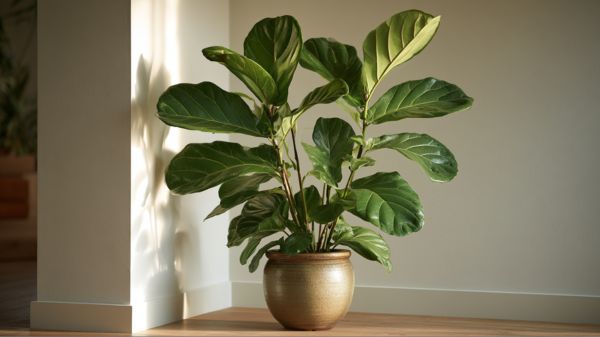
1. The Ficus Audrey (Ficus benghalensis)
Best for: Softening very sharp architectural angles and pillars.
Unlike the finicky Fiddle Leaf Fig, the Ficus Audrey is resilient, forgiving, and features beautiful, rounded, velvet-like leaves. Placing a tall Ficus Audrey in a sharp corner softens the harsh lines of the room, creating a much more gentle, inviting atmosphere. Its canopy-like growth habit naturally shields you from poison arrows.
2. The Snake Plant (Sansevieria trifasciata)
Best for: Dark corners behind doors or low-light hallways.
If you have a dark, stagnant corner where nothing else will grow, the Snake Plant is your ultimate tool. Its sword-like, upright leaves actively push energy upward, acting like an energetic pump for trapped, heavy vibes. While its leaves are pointed, they grow straight up, lifting the ceiling’s energy rather than pointing aggressively out into the room. Plus, they release oxygen at night, making them perfect for bedroom corners!
3. The Parlor Palm (Chamaedorea elegans)
Best for: Gentle circulation in living rooms and family spaces.
Palms have an incredibly soft, feathery texture that diffuses harsh energy beautifully without feeling heavy. A tall Parlor Palm placed in an empty corner gently circulates the air and the Chi, preventing stagnation without taking up too much visual weight. It is perfect for spaces where you want a relaxed, tropical, and easy-going energy.
4. The Rubber Tree (Ficus elastica)
Best for: Corners associated with wealth and career (The Southeast or North).
Rubber Trees have thick, dark, glossy leaves that are incredibly broad and round. In Feng Shui, these round leaves are associated with coins, wealth, and abundance. If you have a dead corner in your home office, a tall Rubber Tree will not only clear the stagnation but actively attract prosperity into the space.
5. The Bird of Paradise (Strelitzia reginae)
Best for: High-ceiling rooms with massive empty spaces.
If you have a vaulted ceiling and a corner that feels impossibly huge and empty, the Bird of Paradise will fill it effortlessly. Its massive, paddle-shaped leaves fan outward, catching large amounts of stagnant energy and sweeping it back into the room. Its vibrant, active energy is perfect for living rooms and creative spaces.
6. Dracaena Marginata (Dragon Tree)
Best for: Modern, minimalist spaces that need a fiery energy boost.
With its slender trunk and explosive, fountain-like bursts of red-edged leaves, the Dragon Tree looks exactly like the energy it provides: a gentle firework. It brings an upward, active, and slightly fiery “Yang” energy to spaces that feel too cold, too dark, or too sterile.
7. The Weeping Fig (Ficus benjamina)
Best for: Bedrooms or spaces needing deep emotional healing.
The Weeping Fig features hundreds of tiny, teardrop-shaped leaves that cascade downward on graceful arches. While it grows tall, its sweeping branches create a highly protective, soothing canopy. It is the perfect energetic cure for a corner in a room where you go to cry, rest, or heal from emotional burnout.
The Five Elements: Choosing the Right Pot
In High-Vibe design, the plant is only half of the cure; the pot it sits in provides the foundation. You can use the material and color of your planter to balance the Feng Shui “Five Elements” in your room.
- Earth Element (Terracotta, Ceramic, Square shapes): Grounds the plant. Use this if the room feels too chaotic, busy, or stressful. It anchors flighty energy.
- Metal Element (Brass, White, Gray, Round shapes): Promotes clarity, focus, and precision. Use a metal pot if the dead corner is in a home office or a space where you need to concentrate.
- Water Element (Glass, Black, Dark Blue, Wavy patterns): Promotes wisdom, flow, and spirituality. Perfect for a corner near an altar or a meditation space.
- Fire Element (Red, Orange, Triangular patterns): Use sparingly. Fire activates energy quickly. A red pot can jump-start a deeply depressing, stagnant room, but might be too aggressive for a bedroom.
- Wood Element (Rattan, Bamboo, Green): Amplifies the plant’s natural growth energy. Great for family rooms and areas where you want to foster health and new beginnings.
How to Assess and Fix Your Space Today (Step-by-Step)
Ready to clear the energy in your home? Follow this simple protocol:
- The Center Stand: Stand in the exact center of your room. Close your eyes, take a deep breath, and slowly look around. Where does your eye get “stuck”? Where does the room feel the darkest or heaviest?
- Hunt for Arrows: Look at your main seating area or your bed. Are there any sharp wall edges or pillars pointing directly at you?
- Choose Your Guardian: Select a plant from the list above that matches your home’s lighting conditions and the specific energetic need of the space.
- Set the Intention: When you place the plant in the corner, don’t just drop it and walk away. Water it, wipe its leaves, and speak an intention over it. Say something like, “May this plant absorb all heaviness and radiate peace and vitality into this room.”
You will be shocked at how immediately the room feels lighter, softer, and more energetically balanced. The space will literally breathe a sigh of relief.
Frequently Asked Questions (FAQs)
Can I use a hanging plant instead of a tall floor plant to fix a corner?
Yes! If you do not have the floor space for a large pot, a hanging plant (like a Golden Pothos or a Philodendron) suspended from the ceiling in a corner works beautifully. As the vines trail downward, they draw energy from the ceiling down to the floor, creating a similar cascading waterfall effect that breaks up stagnation.
What happens if the plant in my dead corner starts dying?
This is a very common occurrence in spiritual practices. If you place a healthy plant in a dead corner and it quickly sickens (assuming you are watering it correctly and it has enough light), it means the plant is absorbing a massive amount of toxic or heavy energy on your behalf. Thank the plant for its service, remove it, cleanse the corner physically (with salt water) and energetically (with a simmer pot or sound healing), and try again with a more resilient plant like a Snake Plant.
Do I need a plant in every single corner of my house?
Absolutely not. Cluttering every corner with plants can actually create a chaotic, overgrown “jungle” energy that causes its own kind of stress. Focus only on the corners that feel heavy, the ones that are excessively deep, or the sharp architectural angles that point at your resting spaces.
Start Building Your Sanctuary
Fixing your dead corners is just the very first step in transforming your house into a high-vibe sanctuary.
Ready to build your own spiritual indoor jungle and manipulate the energy of every room? Grab my free eBook, The Sacred Garden, and discover 24 more powerful plants specifically chosen to manifest wealth, protect your peace, and transform your space. 👉 Download it for free here and start your journey today.