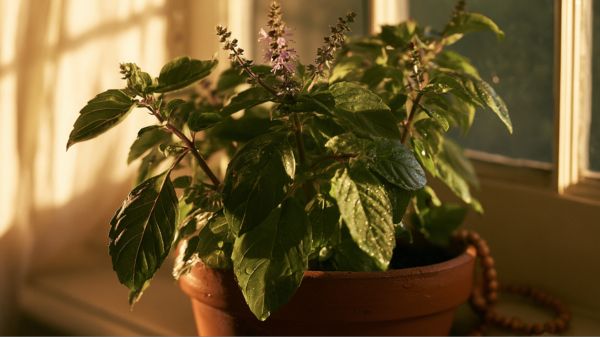

Holy basil, known as Tulsi, occupies a singular position among cultivated herbs, distinguished by its cultural, medicinal, and spiritual significance. Unlike common culinary basil, Tulsi demonstrates distinct physiological requirements that demand precise environmental controls when grown indoors. Successful cultivation depends on understanding these variables, from soil composition to light exposure, each of which directly influences plant health and, according to traditional practice, its sacred properties. Let’s explore further about this holy basil (tulsi) care guide.
Key Takeaways
- Holy basil thrives indoors with six to eight hours of direct sunlight daily from south- or west-facing windows or full-spectrum grow lights.
- Use well-draining soil with perlite, coarse sand, and organic compost in a six-to-eight-inch terracotta pot with drainage holes.
- Maintain temperatures between 65–95°F and humidity between 40–60%, keeping the plant away from drafts and vents.
- Harvest stems above leaf nodes during morning hours and remove flower spikes to sustain continuous foliage and essential oil production.
- Ritual care includes watering at dawn, avoiding harvesting on sacred days, and placing the plant near east-facing windows.
What Makes Holy Basil Different From Regular Basil?
Holy basil (Ocimum tenuiflorum), also known as tulsi, is a distinct species from common culinary basil (Ocimum basilicum), differing in its biochemical composition, morphological characteristics, and cultural significance.
Unlike its culinary counterpart, holy basil contains elevated concentrations of eugenol, rosmarinic acid, and ursolic acid, compounds that contribute to its well-documented health benefits, including adaptogenic, antimicrobial, and anti-inflammatory properties.
Morphologically, holy basil produces smaller, serrated leaves with purple-tinged stems, distinguishing it visually from the broader, smoother foliage of common basil.
While common basil dominates culinary uses in Mediterranean cuisine, holy basil holds revered status in Ayurvedic medicine and Hindu spiritual practice. Its flavor profile, characterized by clove-like, peppery notes, further differentiates it from the sweeter, more herbaceous taste of Ocimum basilicum.
Which Tulsi Variety Should You Grow Indoors?
Selecting the appropriate tulsi variety for indoor cultivation depends on several factors, including available light, spatial constraints, and intended use, whether medicinal, culinary, or ornamental. Among the numerous tulsi varieties, three demonstrate particularly favorable indoor benefits:
- Rama Tulsi (Ocimum tenuiflorum) — characterized by green leaves and a mild clove-like flavor, adapting well to moderate indoor light conditions.
- Krishna Tulsi (Ocimum tenuiflorum var.) — distinguished by purple-tinged foliage, requiring slightly higher light exposure while offering potent medicinal properties.
- Vana Tulsi (Ocimum gratissimum) — a wild variety producing robust growth, suitable for larger indoor spaces with ample ventilation.
Each variety presents distinct growth requirements and biochemical profiles, necessitating careful consideration before indoor planting commences.
The Soil Mix and Pot Setup That Keeps Indoor Tulsi Healthy
Once the appropriate tulsi variety has been selected, establishing a suitable soil composition and container configuration becomes the next critical determinant of sustained indoor growth. Ideal soil drainage prevents root rot, requiring a well-aerated mixture combining perlite, coarse sand, and organic compost. Pot size directly influences root development, with containers measuring six to eight inches in diameter accommodating most tulsi varieties adequately.
| Component | Purpose |
| Perlite | Enhances soil drainage |
| Organic compost | Supplies essential nutrients |
| Coarse sand | Improves aeration |
Drainage holes remain non-negotiable, as stagnant moisture creates anaerobic conditions detrimental to root systems. Terracotta containers, which naturally regulate moisture through evaporation, are frequently recommended over plastic alternatives, particularly in humid indoor environments where excess moisture accumulation presents consistent challenges.
How Much Light Does Indoor Tulsi Actually Need?
Indoor Tulsi (Ocimum tenuiflorum) requires a minimum of six to eight hours of direct sunlight daily, a threshold that directly influences the plant’s photosynthetic efficiency, essential oil production, and overall structural integrity.
South- or west-facing windows, which receive the most consistent and intense natural light exposure throughout the day, are considered ideal placement positions for maintaining adequate lux levels without subjecting the plant to temperature fluctuations common near drafty frames.
In cases where natural light is insufficient, full-spectrum grow lights, positioned approximately six to twelve inches above the canopy and set to a 14-16 hour photoperiod, can effectively compensate for the light deficit, sustaining healthy vegetative growth throughout the indoor growing cycle.
Tulsi’s Daily Light Needs
Tulsi (Ocimum tenuiflorum), a plant native to the Indian subcontinent, requires a minimum of six to eight hours of direct sunlight per day to sustain healthy growth when cultivated indoors, a requirement that reflects its tropical origins and high photosynthetic demands.
Growers must assess available natural light sources and supplement with artificial light where necessary. Three primary considerations govern daily light management:
- South-facing windows provide the most consistent natural light exposure throughout the day.
- Artificial light sources, specifically full-spectrum LED grow lights, compensate for insufficient natural light during winter months.
- Light duration should be monitored consistently, as irregular exposure disrupts chlorophyll synthesis and overall plant health.
Maintaining adequate light levels remains the single most critical variable in successful indoor Tulsi cultivation.
Ideal Window Placement Tips
Proper window placement, building upon the foundational understanding of daily light requirements, determines whether Tulsi receives the full six to eight hours of direct sun exposure necessary for sustained photosynthetic activity.
South-facing windows, which accommodate favorable sunlight angles throughout the day, provide the most consistent solar radiation for indoor cultivation, particularly during winter months when solar elevation decreases considerably.
East-facing windows deliver adequate morning light, though afternoon exposure remains insufficient for ideal growth. West-facing windows supply afternoon sunlight, compensating partially for reduced morning hours.
Window types, including single-pane, double-pane, and UV-filtering glass, affect light transmission rates differently, with UV-filtering varieties potentially reducing photosynthetically active radiation. Positioning Tulsi within twelve inches of the glass surface minimizes light diffusion losses caused by increasing distance from the primary light source.
Supplementing With Grow Lights
Many indoor environments fail to provide the six to eight hours of direct sunlight that Tulsi requires for sustained photosynthetic efficiency, making artificial supplementation a practical necessity for growers operating in low-light conditions or during shortened winter photoperiods.
Full-spectrum LED grow lights, which replicate natural light spectrum distributions, demonstrate superior LED efficiency compared to fluorescent alternatives, consuming fewer watts while delivering ideal photosynthetic photon flux density.
Effective supplemental lighting protocols include:
- Positioning LED panels six to twelve inches above the canopy to maximize light spectrum absorption without inducing photoinhibition.
- Maintaining supplemental photoperiods of twelve to sixteen hours daily using programmable timers.
- Selecting LED units rated between 2700K and 6500K to support both vegetative development and essential oil biosynthesis.
How to Water Holy Basil Without Overwatering It
Watering holy basil correctly requires an understanding of the plant’s moisture preferences, as it thrives in consistently moist but well-drained soil rather than saturated conditions.
Effective watering techniques involve inserting a finger approximately one inch into the soil to assess dryness before applying water, ensuring the root zone receives adequate hydration without promoting fungal development.
Moisture monitoring should be conducted every two to three days, particularly during warmer seasons when evaporation rates increase considerably. Water should be applied directly at the soil level, avoiding foliage contact, which reduces disease susceptibility.
Drainage holes in the container must remain unobstructed, allowing excess water to exit freely. Waterlogged conditions cause root rot, yellowing leaves, and eventual plant decline, making proper drainage as critical as irrigation frequency.
🌿 Want to bring more high-vibe energy into your home?
If you loved learning about the hidden powers of this plant, you’ll love my free guide. Discover the exact plants you need for love, wealth, and spiritual shielding in The Sacred Garden: 25 Spiritual Plants for Healing, Protection & Abundance.
👉 Click here to download your free copy now.
The Indoor Climate Holy Basil Needs to Stay Healthy
Indoor climate conditions greatly influence the health and productivity of holy basil, as the plant requires specific temperature ranges, humidity levels, and air circulation to develop properly. Growers should maintain the following indoor climate parameters:
- Temperature: Holy basil thrives within temperature ranges of 65–95°F (18–35°C), requiring consistent warmth without sudden fluctuations.
- Ideal Humidity: Maintaining ideal humidity levels between 40–60% prevents leaf desiccation while discouraging fungal development on foliage and stems.
- Air Circulation: Gentle, consistent airflow reduces stagnant moisture accumulation around the plant’s canopy, minimizing disease risk.
Positioning holy basil away from cold drafts, air conditioning vents, and heating units guarantees environmental stability, as abrupt temperature shifts compromise cellular integrity and greatly reduce the plant’s aromatic compound production.
How to Fertilize and Prune Tulsi for Steady Growth
Fertilizing and pruning tulsi at regular intervals sustains vigorous foliage production, prevents premature flowering, and maximizes the concentration of aromatic compounds within the plant’s leaves and stems.
Fertilization methods should incorporate balanced, diluted liquid fertilizers applied biweekly during active growth. Pruning techniques require removing apical shoots above leaf nodes to encourage lateral branching.
| Growth Stage | Fertilizer Type | Pruning Action |
| Seedling | Quarter-strength liquid | None |
| Vegetative | Half-strength balanced | Tip pinching |
| Pre-Flowering | Full-strength nitrogen | Node trimming |
| Flowering | Reduced phosphorus | Flower removal |
| Mature | Maintenance dosage | Structural shaping |
Consistent application of both fertilization methods and pruning techniques, particularly when flower stalks emerge, redirects the plant’s energy toward leaf development, sustaining aromatic potency throughout the growing cycle.
How to Harvest Holy Basil Without Harming the Plant
Harvesting holy basil correctly, much as pruning and fertilization sustain vegetative output, determines whether the plant continues productive growth or enters irreversible decline. Effective harvesting techniques require precision, as improper removal of foliage disrupts hormonal signaling, reducing regenerative capacity and ultimately compromising maximizing yield objectives.
Harvesting holy basil with precision determines whether the plant thrives or enters irreversible, unrecoverable decline.
Practitioners should observe the following sequence:
- Harvest stems directly above a leaf node pair, retaining at least two node sets on each branch.
- Remove flower spikes immediately upon emergence, redirecting plant energy toward foliar production.
- Harvest during morning hours, when essential oil concentration peaks, ensuring superior aromatic quality.
Consistent application of these methods sustains continuous foliar output, prevents premature lignification, and preserves the plant’s structural integrity across successive harvest cycles throughout the growing season.
The Ritual Care Practices That Inform How Tulsi Is Grown
Tulsi, revered across Hindu tradition as a sacred plant, occupies a distinct position within domestic and temple cultivation practices, where its care extends beyond horticultural methodology into structured ritual observance.
Practitioners traditionally water Tulsi at dawn, offer lamp light during evening prayers, and abstain from harvesting on designated days, including Sundays and Ekadashi. These practices carry ritual significance, governing not merely the plant’s physical maintenance but its perceived sanctity within the household.
The spiritual benefits associated with consistent ritual care include purification of domestic space and the cultivation of devotional discipline. Placement near east-facing windows aligns with traditional prescriptions favoring morning sunlight exposure. Caregivers are advised to observe these conventions when integrating Tulsi cultivation into both spiritually oriented and conventional indoor growing environments.
Yellowing Leaves, Root Rot, and Other Tulsi Problems Solved
Despite its resilience, Tulsi (Ocimum tenuiflorum) remains susceptible to a range of pathological conditions, including chlorosis, fungal root rot caused by Pythium and Fusarium species, and bacterial leaf spot, each of which presents with distinct morphological indicators that facilitate accurate diagnosis.
Yellowing leaves, which may result from nitrogen deficiency, overwatering, or pathogenic infection, require differential assessment to determine whether the underlying cause is nutritional, environmental, or microbial in origin.
Corrective intervention, whether through soil amendment, drainage optimization, or targeted fungicide application, must be calibrated to the specific etiology identified through careful observation of symptom progression, root coloration, and soil moisture levels.
Identifying Common Tulsi Diseases
Even the most attentive growers may find that holy basil (Ocimum tenuiflorum) exhibits signs of disease, with yellowing leaves, wilting stems, and root deterioration representing the most frequently encountered pathological conditions. Accurate identification remains essential for effective intervention and sustained plant health.
Three primary disease categories warrant careful observation:
- Leaf spot — dark, water-soaked lesions indicating bacterial or fungal infections requiring prompt removal of affected foliage.
- Powdery mildew — white, chalky surface coatings signaling elevated humidity and restricted airflow conditions.
- Root rot — soft, discolored root tissue resulting from overwatering or inadequate drainage.
Comprehensive pest management strategies, including routine inspection and environmental adjustment, greatly reduce disease incidence, preventing fungal infections from establishing and compromising the plant’s overall structural integrity and productivity.
Fixing Yellowing and Rot
Recognizing the symptoms outlined above represents only the first step, as addressing the underlying causes of yellowing leaves, root rot, and related conditions requires targeted corrective action informed by accurate diagnosis.
When nutrient deficiency presents as interveinal chlorosis or uniform leaf yellowing, a balanced, water-soluble fertilizer applied at half strength corrects deficiencies without risking chemical burn.
Environmental stress, including excessive moisture retention, compacted soil, or inadequate drainage, directly precipitates root rot, requiring immediate repotting into fresh, well-draining medium after trimming affected roots with sterilized implements.
Overwatering remains the primary correctable factor, and establishing a consistent moisture-monitoring protocol, allowing the top inch of soil to dry between irrigation cycles, notably reduces recurrence. Improving air circulation further mitigates fungal proliferation associated with persistent humidity.
Ready to build your own spiritual indoor jungle? Grab my free eBook, The Sacred Garden, and discover 24 more powerful plants to transform your space. Download it for free here.
Frequently Asked Questions
Can Holy Basil Be Grown Alongside Other Indoor Herbs Safely?
Holy basil demonstrates favorable herb compatibility when cultivated alongside mint, chamomile, and oregano, as companion planting principles support mutual growth enhancement among these species. Gardeners should guarantee adequate spacing, as root competition may inhibit development. Avoiding fennel proximity is recommended, given its allelopathic properties. Consistent airflow, appropriate soil drainage, and balanced light distribution remain critical environmental factors when co-cultivating multiple herb varieties within indoor settings.
How Long Does a Typical Indoor Tulsi Plant Actually Live?
How ironic that humanity’s most revered spiritual herb surrenders to mortality within a mere one to two years indoors. Tulsi lifespan factors include light exposure, humidity, and soil nutrition, all of which dramatically influence longevity. Consistent indoor care tips — maintaining temperatures between 65-85°F, providing six-plus hours of light, and pruning flowering stems promptly — extend its viability, though the plant ultimately follows an annual or biennial lifecycle regardless of devotion applied.
Is Holy Basil Safe to Grow Around Cats and Dogs?
Holy basil presents minimal holy basil toxicity concerns, as the ASPCA classifies it as non-toxic to cats and dogs, making pet safety a manageable consideration for households maintaining indoor specimens. However, ingestion of significant quantities may cause mild gastrointestinal disturbance, including vomiting or diarrhea, in sensitive animals. Placement at elevated heights remains advisable, preventing repeated consumption while preserving the plant’s foliage integrity and the pet’s digestive stability.
Can Tulsi Plants Be Gifted or Shared Through Cuttings?
Like a torch passed between hands, tulsi propagation techniques allow one plant to illuminate many homes. Gifting plant traditions surrounding tulsi hold cultural significance, as cuttings taken from a healthy stem, approximately 4-6 inches in length, stripped of lower leaves, and placed in moist soil or water, root successfully within two weeks, enabling recipients to cultivate thriving specimens from a single shared source.
Does Growing Tulsi Indoors Reduce Its Medicinal or Spiritual Potency?
Growing Tulsi indoors does not inherently diminish its potency factors, provided the indoor environment adequately replicates essential growth conditions, including sufficient light exposure, humidity levels, and soil composition. Researchers and traditional practitioners note that medicinal alkaloids and spiritual significance remain intact when the plant thrives under ideal care. Deficiencies in sunlight or improper watering, however, may compromise leaf density and essential oil concentration, thereby reducing overall efficacy.
Conclusion
Caring for holy basil indoors requires consistent light, consistent moisture, and consistent attention to its ritual significance. Those who maintain proper soil drainage, appropriate temperatures, and deliberate harvesting techniques cultivate not merely a thriving plant but a disciplined horticultural practice. Those who integrate Tulsi’s spiritual dimensions alongside its botanical requirements develop a more complete understanding of its cultural role. Ultimately, indoor Tulsi cultivation rewards precision, rewards patience, and rewards practitioners with both horticultural competence and heightened spiritual awareness.