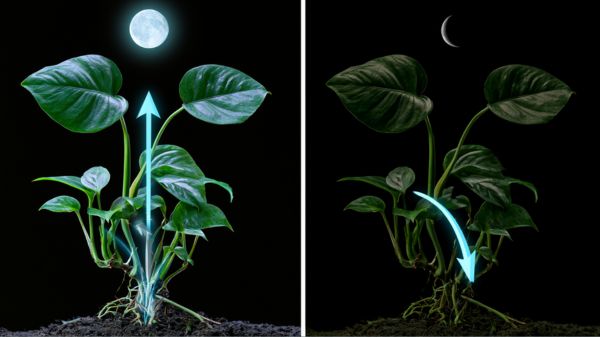

Have you ever watered, fed, and pampered a plant, only to watch it inexplicably wilt? Meanwhile, another plant you barely pay attention to seems to thrive overnight. While light and soil are important, there is an invisible force at play that most modern gardeners completely ignore: gravity. Just as the moon’s gravitational pull dictates the rising and falling of the ocean’s tides, it also pulls on the moisture inside the earth—and the sap inside your plants. By understanding “Moon Gardening” (also known as lunar gardening), you can time your planting, pruning, and harvesting to work with this natural rhythm instead of fighting against it.
Watch the video above for a visual breakdown of lunar sap flow, or keep reading for the ultimate masterclass!
The Forgotten Science of Lunar Agriculture
Before the invention of synthetic fertilizers and artificial grow lights, humans relied entirely on the cosmos to dictate their agricultural cycles. The Old Farmer’s Almanac, which has been published continuously since 1792, still includes a lunar calendar to tell farmers exactly when to plant their crops.
But this isn’t just folklore or superstition. It is physics.
The earth and the moon have a magnetic, gravitational relationship. We easily accept that the moon is powerful enough to pull billions of gallons of ocean water up onto the shore and then drag it back out to sea. It only makes logical sense that this massive gravitational force also pulls on the groundwater beneath our feet, as well as the water contained within the cellular structures of living things.
Since plants are composed of up to 95% water, they are incredibly sensitive to these microscopic gravitational shifts.
How Lunar Gravity Changes Plant Sap
To master moon gardening, you need to understand the concept of “sap flow.” Sap is the lifeblood of your plant. It carries water, sugar, and essential nutrients from the roots up to the leaves, and back down again.
- When lunar gravity is high (Waxing to Full Moon): Moisture is physically pulled up toward the surface of the soil. Inside the plant, the sap rushes upward into the stems, leaves, and flowers.
- When lunar gravity is low (Waning to New Moon): The gravitational pull relaxes. The moisture in the soil recedes deeper underground, and the sap inside the plant sinks back downward into the root system.
Imagine trying to swim upstream against a rushing river. If you prune a plant when the sap is aggressively rushing upward, the plant will “bleed” more sap, lose vital nutrients, and take significantly longer to heal. But if you prune when the sap has naturally retreated down into the roots, the plant barely feels the cut, healing swiftly and cleanly.
Let’s break down the four main lunar phases, what is happening energetically, and exactly how you should treat your plants during each one.
🌕 Now you know exactly when to plant—but do you know what to plant?
Aligning with the moon is only half the magic. To truly transform the energy of your home, you need the right botanicals. Get my free eBook, The Sacred Garden, to discover 25 spiritual plants specifically chosen for healing, protection, and drawing in abundance. 👉 Click here to get your free guide.
Phase 1: The New Moon (Rest and Grounding)
The New Moon occurs when the moon is positioned directly between the Earth and the Sun. The side of the moon facing us is completely cast in shadow.
The Physics: During the New Moon, lunar gravity is at its lowest point. The night sky is pitch black.
The Sap Flow: Because the upward pull is practically non-existent, the plant’s sap settles deep down into the root system. The above-ground foliage is essentially resting.
Best Tasks for the New Moon
The New Moon is universally recognized in spiritual practices as a time of new beginnings, setting intentions, and focusing on hidden foundations.
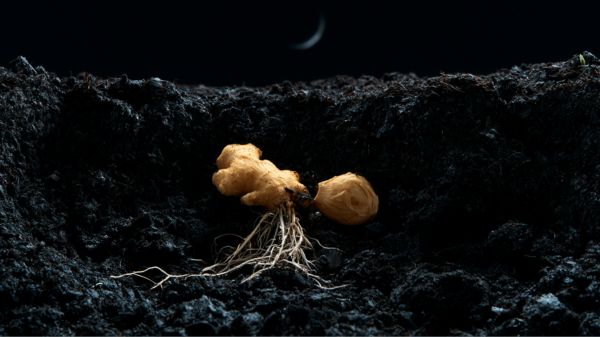
- Planting Root Crops: Since the energy is pulling downward, this is the perfect time to plant anything that yields its harvest below the soil. Carrots, potatoes, onions, garlic, and spiritual roots like Ginger and Valerian thrive when planted in the dark moon.
- Weeding: Because above-ground growth is suppressed and the sap isn’t flowing upward, weeds pulled during a New Moon are much less likely to aggressively sprout back from leftover root fragments.
- Resting: Just as your plants are resting, you should too. Avoid taking cuttings or trying to force new leaf growth during this phase.
Phase 2: The Waxing Moon (The Upward Surge)
The Waxing Moon is the roughly 14-day period where the moon transitions from a dark sliver into a bright, full sphere. (Hint: “Waxing” means growing).
The Physics: As the moon grows larger in the sky, its gravitational pull steadily increases. Simultaneously, the amount of moonlight reflecting down onto your garden increases every single night.
The Sap Flow: Moisture is actively drawn up from the deep earth into the topsoil. Inside your houseplants and garden, sap begins to surge upward, filling out the stems and leaves.
Best Tasks for the Waxing Moon
This is a period of explosive, active “Yang” energy. You want to capitalize on this upward momentum.
- Planting Above-Ground Crops: This is the absolute best time to plant leafy greens, herbs, and foliage-heavy houseplants. If you want a lush, bushy Pothos, a massive Monstera, or a thriving Basil plant for your wealth altar, plant them or sow their seeds now.
- Propagation and Cuttings: Because the stems are completely engorged with water and active growth hormones, stem cuttings taken during a Waxing Moon are highly resilient. They are much more likely to push out new white roots when placed in water, and far less likely to rot.
- Applying Fertilizer: Plants are incredibly thirsty right now. If you apply a liquid organic fertilizer or top-dress your soil with compost, the rising moisture will carry those nutrients straight up into the new leaves.
Phase 3: The Full Moon (Peak Vitality)
The Full Moon is the climax of the lunar cycle. The moon is fully illuminated and sits opposite the sun.
The Physics: The gravitational pull is at its absolute peak. The water table in the earth is at its highest point of the entire month.
The Sap Flow: The plant is entirely engorged. The cellular structure of the foliage is stretched to its maximum capacity, filled to the brim with water, nutrients, and aromatic compounds.
Best Tasks for the Full Moon
The Full Moon is highly spiritual, deeply active, and heavily concentrated.
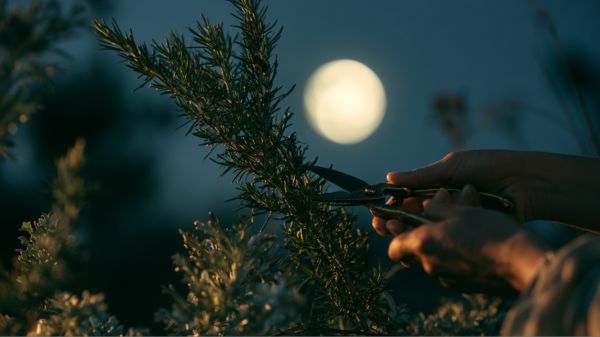
- Harvesting Spiritual Herbs: If you are harvesting Rosemary, Lavender, or Mugwort to dry for teas, simmer pots, or smudge bundles, do it exactly on the Full Moon. Because the leaves are engorged, the concentration of essential oils and spiritual vitality is at its maximum. Your herbs will smell stronger and carry a much higher energetic frequency.
- Deep Watering: The soil is primed and open to absorb moisture. Give your indoor jungle a thorough, deep watering.
- What NOT to do: Do not prune your plants right now. Trimming a plant during a Full Moon is like cutting a pressurized hose. It will lose excess sap, invite disease, and suffer from intense stress.
Phase 4: The Waning Moon (The Exhalation)
The Waning Moon is the 14-day period immediately following the Full Moon, where the light begins to visibly shrink away until the sky is dark again. (Hint: “Waning” means fading).
The Physics: The intense gravitational pull of the Full Moon is releasing. The moonlight decreases every night.
The Sap Flow: The sap stops rushing into the leaves and begins a slow, steady retreat back down the stems and into the root system.
Best Tasks for the Waning Moon
This is nature’s time to exhale. It is a period for maintenance, boundary setting, and clearing out the old.
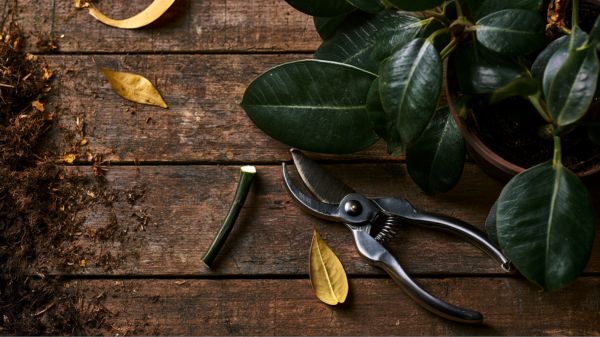
- Pruning and Trimming: Because the sap has retreated toward the roots, the upper branches contain less moisture. If you need to cut back a wild vine, shape a Ficus, or remove dead/yellowing leaves, do it now. The wounds will dry and heal incredibly fast, saving the plant from trauma.
- Repotting and Transplanting: Moving a plant from one pot to another is inherently stressful. Doing it during the Waning Moon—when the active, leafy growth has paused and the energy is focused downward in the roots—helps the plant recover from transplant shock much faster.
- Energy Sweeps: As you physically prune dead leaves away from your plants, use this Waning energy to spiritually prune away bad habits, lingering stress, or energetic clutter from your home.
Does Moon Gardening Work for Indoor Houseplants?
A very common question is: Does this actually apply to my potted plants sitting on a shelf inside my apartment?
The answer is a resounding yes. While your indoor plants are sheltered from the wind and rain, they are not sheltered from gravity. The moon’s gravitational pull easily penetrates the roof of your house.
In fact, because potted plants live in a highly controlled, restricted environment (they only have access to the soil inside their pot), they are often more sensitive to these internal energetic shifts. Syncing your watering, repotting, and propagating routines with the lunar calendar is one of the greatest secrets to a thriving indoor jungle.
Frequently Asked Questions (FAQs)
What if I miss the exact day of the Full or New Moon?
Don’t panic! The moon phases are not light switches; they are gentle transitions. You usually have a 2-to-3-day window on either side of the exact lunar event to reap the benefits. If the Full Moon is on a Wednesday, harvesting your herbs on a Tuesday or Thursday will still yield incredible results.
Do I need a telescope or special equipment to track the moon?
Not at all. You can simply look up at the night sky! If the light is growing from the right side, it is waxing. If the light is shrinking from the left side, it is waning. Alternatively, you can use dozens of free smartphone apps, or simply check the weather app on your phone, which almost always displays the current lunar phase.
What happens if I prune a plant during the Waxing Moon? Will it die?
It likely won’t die, especially if it’s a hardy houseplant like a Pothos or Snake Plant. However, it will experience unnecessary stress. It might temporarily stunt its growth, drop a healthy leaf in shock, or take a few extra weeks to push out new growth. Moon gardening is about optimizing health and energy, not operating in fear.
Start Aligning Your Space
Moon gardening isn’t just an old wives’ tale; it is a profound way to sync your daily habits with the natural, rhythmic breathing of the earth. When you stop fighting nature and start riding the cosmic wave of lunar energy, your plants will flourish, and the energy in your home will feel incredibly vibrant and intentional.
Start paying attention to the sky before you grab your pruning shears or your watering can. The moon is always guiding you.
Maximize your lunar gardening and high-vibe design! Pair your moon phases with the most spiritually potent plants. Download my free eBook, The Sacred Garden: 25 Spiritual Plants, right here.