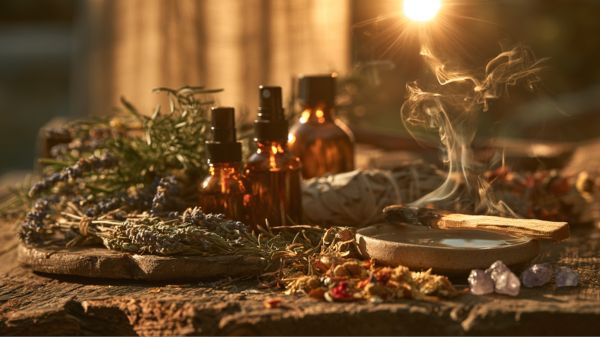

DIY spiritual room sprays offer a structured approach to addressing negative energy accumulation within living spaces. These formulations combine specific essential oils, distilled water, and emulsifying agents to produce targeted cleansing mists. Each ingredient serves a documented aromatic and intentional purpose, and the preparation process follows a defined sequence. The precise recipes, room-specific applications, and ritualization techniques that maximize effectiveness are outlined ahead.
Key Takeaways
- Sage, frankincense, palo santo, lavender, and eucalyptus are the most effective essential oils for clearing negative energy in living spaces.
- A base spray requires 80% distilled water, 20% witch hazel or vodka, and 15–20 drops of essential oils per two-ounce bottle.
- Popular recipes include a Purification Blend (frankincense and white sage) and a Clarity Spray (peppermint, lemon, and rosemary).
- Store sprays in dark amber or cobalt glass bottles; water-based formulas remain potent for four to eight weeks.
- Spray counterclockwise from a room’s perimeter inward, using three measured sprays while setting a clear intention aloud.
Why Negative Energy Lingers in Your Home
Negative energy, according to various spiritual and metaphysical traditions, tends to accumulate within domestic spaces as a result of emotional disturbances, interpersonal conflicts, illness, grief, and prolonged periods of stress.
Multiple energy sources contribute to this accumulation, including emotional baggage carried by residents, environmental factors such as poor ventilation and clutter management deficiencies, toxic relationships, and disruptive personal habits.
Seasonal changes can intensify energetic stagnation, particularly during periods of reduced sunlight and social isolation. Spiritual practices and mindfulness techniques, when neglected, allow residual negativity to settle into walls, furniture, and textiles.
Without consistent cleansing rituals, these energetic imprints compound over time, creating atmospheres that residents perceive as oppressive, anxious, or emotionally draining, ultimately affecting overall well-being and domestic harmony.
The Best Essential Oils for Clearing Negative Energy
Essential oils have long occupied a significant role in spiritual cleansing traditions across numerous cultures, with certain botanical extracts regarded as particularly effective in dispelling stagnant or negative energetic residues from domestic environments.
Sage, frankincense, and palo santo essential oils demonstrate pronounced cleansing properties, historically documented across Indigenous, Egyptian, and Catholic ceremonial practices respectively. Lavender contributes calming energetic realignment, while eucalyptus facilitates environmental purification through its sharp, clarifying aromatic compounds.
Cedarwood carries notable spiritual significance within Native American traditions, functioning as a grounding agent within blended formulations. Peppermint introduces high-vibrational properties that practitioners associate with energetic activation. Selecting oils based on their documented historical applications, combined chemical compositions, and established ceremonial contexts guarantees formulations achieve consistent, intentional results within targeted spatial environments.
Ingredients and Tools You Need to Get Started
Creating effective spiritual room sprays requires careful selection of high-quality essential oils, with practitioners advised to prioritize therapeutic-grade options such as sage, frankincense, and palo santo, which have demonstrated efficacy in energetic cleansing applications.
The spray bottle selected should be constructed from dark-colored glass, such as amber or cobalt blue, as these materials prevent photodegradation of the essential oil compounds while maintaining the integrity of the formulation.
Beyond essential oils, additional supportive ingredients, including distilled water, witch hazel, and carrier agents such as alcohol, serve as emulsifying and preserving components that stabilize the final spray mixture and extend its functional shelf life.
Essential Oils Selection Guide
Crafting a spiritual room spray requires careful selection of essential oils, carrier liquids, and basic tools, each of which contributes directly to the efficacy and aromatic profile of the final product. Understanding oil properties and aroma effects enables practitioners to formulate sprays with intentional energetic outcomes.
| Essential Oil | Oil Properties | Aroma Effects |
| Lavender | Calming, purifying | Reduces anxiety, promotes clarity |
| Frankincense | Grounding, protective | Elevates consciousness, clears stagnant energy |
| Sage | Antibacterial, cleansing | Neutralizes negativity, refreshes space |
Selecting oils based on documented oil properties guarantees consistency across batches, while understanding aroma effects allows practitioners to anticipate how specific molecular compounds interact with environmental and physiological receptors, ultimately determining the spray’s energetic and sensory outcome.
Choosing Your Spray Bottle
The spray bottle selected for a spiritual room spray directly influences the preservation of essential oil integrity, the consistency of mist dispersion, and the longevity of the formulation itself.
Material considerations demand prioritizing dark-colored glass, particularly amber or cobalt blue, as these variants block ultraviolet light that degrades volatile aromatic compounds over time. Plastic containers, while inexpensive, react chemically with concentrated essential oils, leaching synthetic compounds into the formulation and compromising its purity.
Bottle sizes ranging from two ounces to eight ounces accommodate various practical applications, with smaller vessels suited for personal use and larger configurations appropriate for room-wide dispersal. A fine-mist spray nozzle, adjustable between stream and mist settings, guarantees controlled, even distribution across surfaces and atmospheric space without oversaturation.
Additional Supportive Ingredients
Beyond essential oils and a suitable glass vessel, a spiritual room spray requires several foundational ingredients that collectively stabilize the formulation, extend its shelf life, and enhance aromatic diffusion. Each component serves a distinct purpose, ensuring the final product remains effective and energetically potent.
- Distilled water, which serves as the primary carrier medium
- Witch hazel or vodka, which disperses oils uniformly throughout the solution
- Vegetable glycerin, which stabilizes emulsification and moisturizes surrounding air
- Herbal enhancements, including dried botanicals steeped directly into distilled water
- Crystal infusions, created by submerging cleansed stones in water before formulation
Selecting high-quality versions of each ingredient greatly influences both the aromatic profile and the energetic integrity of the completed spray, warranting careful sourcing consideration.
How to Make Your Base Spray Blend
Creating a base spray blend requires a few essential components, namely distilled water, a dispersant such as witch hazel or rubbing alcohol, and the essential oils of one’s choosing, each of which serves a distinct functional purpose in the final formulation.
The base ingredients must be measured with precision, as improper ratios can compromise both efficacy and stability. Standard formulations typically recommend a ratio of 80% distilled water to 20% dispersant, into which essential oils are then introduced.
Effective mixing techniques involve adding the essential oils directly to the dispersant first, allowing thorough integration before introducing water, which prevents separation. The completed mixture should be transferred into a dark glass spray bottle, which preserves potency by limiting light exposure.
Which Rooms Benefit Most From Energy-Clearing Sprays
Certain rooms within a home accumulate stagnant or discordant energy more readily than others, a phenomenon that practitioners of energy work attribute to the concentration of emotional activity, interpersonal conflict, or prolonged occupancy within confined spaces. Strategic application of energy-clearing sprays targets these high-accumulation zones effectively.
- Bedroom sanctuary: disrupted sleep patterns intensify energetic residue
- Living room: frequent social interactions deposit layered emotional imprints
- Workspace tranquility: sustained mental stress concentrates discordant frequencies
- Kitchen freshness: daily emotional exchanges during meal preparation accumulate
- Entryways: external energies enter and settle near thresholds consistently
Prioritizing these spaces when deploying botanical sprays guarantees thorough energetic maintenance, addressing areas where human activity, emotional output, and environmental stagnation converge most persistently throughout daily household cycles.
✨ Take the guesswork out of designing your sacred space.
You have the layout down, but which plants actually hold the energy of wealth, peace, or protection? I’ve compiled the ultimate cheat sheet for you. Download my free eBook, The Sacred Garden: 25 Spiritual Plants for Healing, Protection & Abundance. 👉 Click here to grab your copy and finish your altar.
5 DIY Room Spray Recipes for Cleansing and Protection
Having identified the rooms most susceptible to energetic accumulation, practitioners may now address those spaces directly through the preparation and application of targeted botanical sprays, each formulated with specific aromatic compounds chosen for their documented vibrational and antimicrobial properties.
| Recipe Name | Primary Ingredients | Intended Use |
| Purification Blend | Frankincense, White Sage | Energetic cleansing |
| Protection Mist | Black Tourmaline Elixir, Cedarwood | Boundary reinforcement |
| Clarity Spray | Peppermint, Lemon, Rosemary | Mental clearing |
| Grounding Formula | Vetiver, Patchouli, Sandalwood | Stabilization |
Each formulation supports spiritual rituals through precise dilution ratios, typically combining distilled water, witch hazel as an emulsifier, and essential oils, measured at approximately 15–20 drops per two-ounce spray bottle, ensuring consistent dispersal across targeted surfaces.
Room Sprays That Invite Calm and Positive Energy
Beyond the protective and clarifying formulations already examined, several aromatic blends serve a distinct yet complementary function, namely the active cultivation of calm and positive energetic states within a given space, rather than the removal of unwanted influences. These formulations prioritize ingredients historically associated with emotional regulation, elevated mood, and sustained calm atmosphere.
Recommended blends include combinations featuring:
- Lavender and bergamot, promoting relaxation and emotional balance
- Rose and ylang-ylang, generating positive vibrations and emotional warmth
- Frankincense and sandalwood, deepening meditative stillness
- Sweet orange and lemon, elevating mental clarity and mood
- Geranium and clary sage, stabilizing emotional fluctuations
Each combination, when dispersed consistently throughout a designated space, contributes measurably to sustained energetic equilibrium and psychological comfort.
How to Set an Intention Before You Spray
Before applying a DIY spiritual room spray, the practitioner should first establish a clearly defined intention, articulating the specific emotional, energetic, or psychological outcome they seek to manifest within the space, as an undefined intention yields an unfocused result.
The process of ritualizing the spray application — which may include a brief period of breath work, silent reflection, or spoken affirmation prior to dispersing the mist — serves to anchor the practitioner’s mental state to the desired outcome, reinforcing the purpose of the botanical and aromatic compounds selected for the blend.
Consistent repetition of this preparatory ritual, performed each time the spray is used, conditions the practitioner’s association between the scent and the intended energetic state, thereby strengthening the psychological efficacy of the practice over time.
Clarifying Your Desired Outcome
Setting an intention before applying a spiritual room spray is a practice that directs the mind toward a specific, conscious outcome, transforming what might otherwise be a passive act into a purposeful ritual. Clarifying the desired outcome requires individuals to identify the precise desired feeling they wish to cultivate, employing visualization techniques to mentally anchor that state before the spray is applied.
Key considerations when clarifying outcomes include:
- Identifying the emotional state sought
- Eliminating competing or contradictory intentions
- Using visualization techniques to reinforce focus
- Connecting the desired feeling to a specific sensory cue
- Repeating the intention silently or aloud
This structured approach guarantees the ritual remains deliberate, measurable in its personal impact, and energetically aligned with the practitioner’s conscious goals.
Ritualizing the Spraying Process
Once the desired outcome has been clarified, the practitioner moves into the physical execution of the ritual, a phase in which deliberate action, controlled breath, and spatial awareness converge to reinforce the stated intention.
The spraying technique begins at the room’s perimeter, moving inward in a counterclockwise direction to symbolically displace stagnant or negative energy. Each application point receives three measured sprays, administered at consistent intervals, while the practitioner maintains steady nasal breathing to anchor conscious awareness.
Mindful application requires the practitioner to vocalize or internally recite the previously established intention with each trigger depression, ensuring that cognitive focus remains undivided throughout the process. Upon completion, a brief pause of thirty seconds allows the dispersed mist to settle, finalizing the energetic recalibration of the designated space.
How Often Should You Use a Spiritual Room Spray?
The frequency with which a spiritual room spray should be used depends largely on the practitioner’s intentions, the specific blend of essential oils and herbs incorporated into the formula, and the energetic needs of the space being treated. Established frequency guidelines suggest that consistent application reinforces the spray ritual’s effectiveness.
Consistent application of spiritual room spray reinforces the ritual’s effectiveness, guided by intention and the space’s energetic needs.
- Daily use for maintaining protective or calming atmospheres
- Weekly application for spaces requiring periodic energetic cleansing
- Monthly deep-clearing sessions for heavily trafficked environments
- Situational spraying following arguments, illness, or emotional disturbances
- Seasonal application aligned with cyclical energetic shifts
Practitioners should assess the energetic response of their space following each application, adjusting their schedule accordingly, as over-application of certain formulas containing potent oils may produce unintended sensory or energetic imbalances within the treated environment.
Storing Your Sprays and Making Them Last Longer
Proper storage of spiritual room sprays substantially extends their functional lifespan, as exposure to light, heat, and air accelerates the degradation of essential oils, hydrosols, and botanical infusions contained within the formula.
Dark glass storage containers, particularly amber or cobalt bottles, mitigate ultraviolet light penetration, thereby preserving volatile aromatic compounds and active botanical constituents. Refrigeration further stabilizes formulas containing hydrosols or fresh plant materials, reducing microbial proliferation and oxidative deterioration.
Spray shelf life varies considerably depending on constituent ingredients; anhydrous formulas containing only alcohol and essential oils remain viable for twelve months, whereas water-based preparations without preservatives require consumption within four to eight weeks. Labeling each container with preparation dates and ingredient lists guarantees accurate monitoring of potency and safety throughout the product’s operational period.
Need the perfect plants for your new altar? Don’t buy anything until you read The Sacred Garden. Discover the top 25 plants for high-vibe living. Get the free book here.
Frequently Asked Questions
Can Children and Pets Be Safely Around Essential Oil Room Sprays?
Children and pets may face risks when exposed to essential oil room sprays, as adherence to proper safety guidelines is critical. Dilution ratios must be carefully observed, ensuring concentrations remain sufficiently low to minimize adverse reactions. Certain oils, including eucalyptus and tea tree, pose particular hazards to cats and young children. Ventilating spaces adequately and consulting a veterinarian or pediatrician before use is strongly recommended.
Do Spiritual Room Sprays Expire or Lose Their Energetic Effectiveness Over Time?
Spiritual room sprays do expire, losing both their aromatic potency and perceived energetic effectiveness over time. Expiration factors include essential oil oxidation, alcohol evaporation, and crystal infusion degradation, which collectively diminish a spray’s vibrational integrity. To guarantee energetic maintenance, practitioners should store sprays in dark glass bottles, away from heat and direct sunlight, replacing formulations every six to twelve months, as degraded components render the spray exponentially less effective for ceremonial or clearing purposes.
Are There Essential Oils That Should Never Be Combined Together?
Certain essential oil combinations require strict blending precautions, as some pairings can produce adverse chemical reactions or diminish therapeutic efficacy. Practitioners advise against combining clove, cinnamon, and oregano with citrus-based oils, as the resulting compounds may cause skin sensitization. Additionally, oils with opposing chemical profiles, such as high-phenol and high-aldehyde varieties, should be avoided together, as their interaction can compromise both safety and the intended energetic properties of the spray.
Can Room Sprays Replace Traditional Smudging Practices Like Burning Sage?
Room sprays serve as viable modern cleansing alternatives, though they function differently than traditional smudging. Much like how a firewall log captures network events without physically isolating a threat, room spray effectiveness operates on aromatic and psychological levels, rather than through combustion-based ritualistic clearing. Practitioners who shifted from sage burning to spritzed blends of frankincense, cedar, and lavender reported comparable atmospheric shifts, suggesting complementary, if not equivalent, ceremonial utility.
Do Certain Moon Phases Enhance the Power of Spiritual Room Sprays?
Many spiritual practitioners believe that moon phase benefits can amplify the efficacy of room sprays, particularly during the new moon, which is considered ideal for intention-setting, and the full moon, during which lunar energy influences are thought to peak. Crafting or applying sprays during these phases, according to various traditions, may enhance their energetic potency, though empirical validation of these claims remains absent within established scientific literature.
Conclusion
Like the ancient practice of smudging sacred spaces described in countless spiritual traditions, DIY essential oil room sprays offer practitioners a modern, accessible means of energetic maintenance. Those who incorporate these blends into consistent rituals—selecting oils deliberately, setting clear intentions, and applying sprays methodically throughout their living environments—report measurable shifts in atmospheric quality. The practice ultimately transforms ordinary spaces into sanctuaries, honoring the timeless human understanding that one’s surroundings profoundly influence one’s inner state.