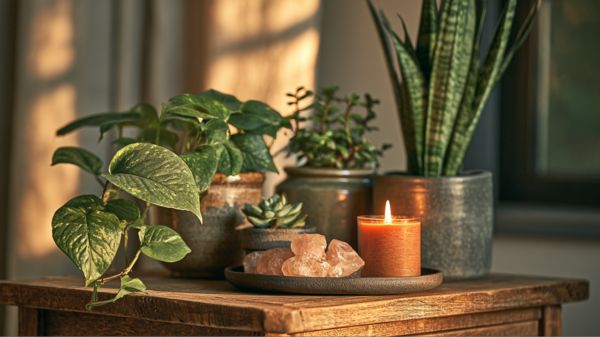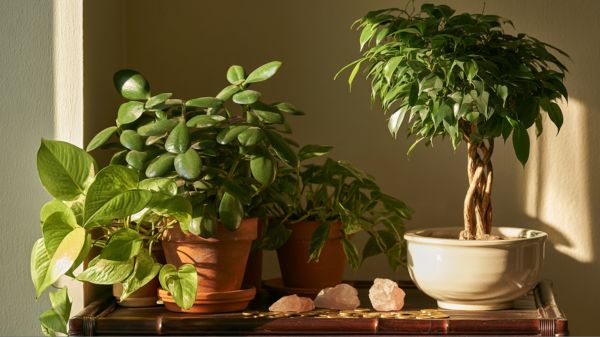
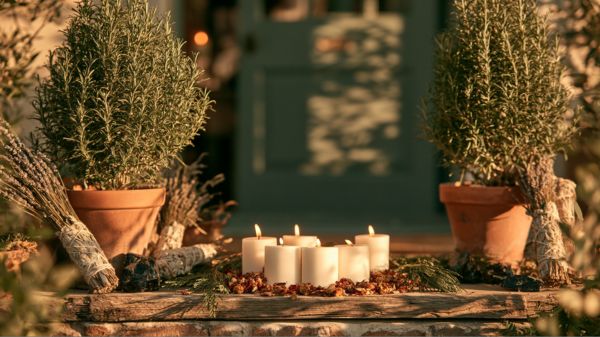

Protection plant altars function as structured, intentional arrangements at residential entrances, combining botanical elements with symbolic objects to establish energetic boundaries. Practitioners across numerous traditions have long recognized the front door as a crossing threshold, vulnerable to incoming influences. The specific selection of plants, placement methodology, and accompanying ritual objects each contribute distinct protective functions. Understanding how these components interact, and why certain combinations outperform others, requires closer examination.
Key Takeaways
- A Protection Plant Altar combines living plants and ritual objects at your front door to create a sacred barrier against negative energies.
- Rosemary, rue, aloe vera, basil, and bay laurel are among the most effective plants for spiritual protection at entrances.
- Place plants symmetrically on both sides of the doorway, with taller plants at the rear and lower ones in the foreground.
- Incorporate black tourmaline, obsidian, or evil eye symbols alongside plants to amplify the altar’s protective energetic field.
- Maintain effectiveness by replacing dead material promptly, cleansing crystals under moonlight, and refreshing the altar each solstice or equinox.
What Is a Protection Plant Altar?
A protection plant altar is a designated sacred space in which living plants are intentionally arranged alongside ritual objects, symbols, and offerings for the specific purpose of generating and maintaining protective energy within a given environment.
The altars significance extends beyond mere decoration, as each element is selected according to established spiritual traditions and cultural frameworks. Practitioners who engage in spiritual rituals utilize these arrangements to establish intentional boundaries against negative influences, harmful energies, and unwanted presences.
The living plants serve as active, energetically responsive components within the altar’s overall structure, functioning in conjunction with non-living elements such as crystals, candles, and sacred symbols. The altar operates as a cohesive, unified system rather than a collection of independent objects.
Why Front Doors Have Always Been Sacred Thresholds
Across virtually every human civilization documented in the historical and anthropological record, the front door and its immediate threshold have occupied a position of profound spiritual and protective significance, functioning not merely as a physical point of entry but as a recognized boundary between the domestic interior and the external world.
The historical significance of threshold guardianship spans continents and millennia, while the sacred symbolism embedded within doorway traditions reflects universal human concerns regarding protection, passage, and spiritual defense.
The front door has never been merely a door — it has always been a threshold between worlds.
- Ancient Romans placed Janus, the two-faced deity, as official threshold guardian
- Egyptian households inscribed protective hieroglyphs directly onto doorframes
- Jewish mezuzot contain sacred scripture, marking doorposts with divine protection
- Chinese door gods, or Menshen, have guarded entrances for over two thousand years
- Celtic traditions involved rowan branches placed above doorways for spiritual shielding
The Best Plants for Spiritual Protection at Your Entrance
Across diverse cultural traditions, certain plants have been consistently identified as possessing protective energetic properties, with rosemary, lavender, and cacti frequently cited in ethnobotanical literature as primary candidates for entrance placement.
The strategic positioning of these specimens follows established principles, wherein plants with sharp or pointed structures are placed at the outermost perimeter of an entryway, while aromatic varieties are positioned closer to the threshold itself, creating a layered defensive arrangement.
Practitioners of these traditions maintain that the efficacy of such configurations depends not only on species selection but also on the directional orientation of the plants relative to the primary axis of the entrance, with east-facing placements considered particularly significant in several documented systems.
Traditional Protective Plant Choices
Certain plants have long been regarded across diverse cultural and spiritual traditions as possessing protective qualities particularly suited to entranceways, thresholds, and altar spaces, with their selection guided by centuries of accumulated folk wisdom, religious practice, and observed energetic properties. These botanical choices serve dual purposes, functioning as herbal remedies while simultaneously facilitating energy cleansing within threshold environments.
- Rosemary, historically placed at doorways for purification and warding
- Rue, used across Mediterranean traditions for deflecting negative influence
- Aloe vera, recognized for absorbing harmful environmental and spiritual energies
- Basil, employed in Hindu and European traditions for sanctifying entrances
- Bay laurel, associated with protective and prophylactic spiritual properties
Each selection reflects regionally specific yet thematically convergent understandings of botanical protective efficacy.
Placement For Maximum Effect
Having established which plants carry the strongest protective associations within threshold contexts, the placement of these botanicals demands equally careful consideration, as positioning determines the degree to which a plant’s attributed energetic properties engage with incoming and outgoing flows of people, objects, and atmospheric conditions.
Practitioners traditionally position protective specimens symmetrically on both sides of an entrance, a configuration that acknowledges the symbolic significance of balanced thresholds while simultaneously addressing bidirectional energy flow.
Plants placed at door-frame height intercept energetic disturbances at the point of entry rather than after penetration has occurred. Additionally, elevated positioning amplifies a specimen’s perceived protective radius, whereas ground-level placement anchors protective intent downward, stabilizing the threshold’s foundational energetic boundary against subtler, lower-frequency disturbances entering through floor-level pathways.
Where Exactly to Position Your Altar at the Front Door
The positioning of a protection plant altar at the front door requires careful consideration of both spatial and environmental factors, as placement determines the altar’s capacity to establish a threshold boundary between the exterior and interior of a dwelling.
Practitioners generally recognize two primary configurations — one situated outside the door, exposed to ambient environmental conditions, and one placed within the interior entry space — each carrying distinct functional and symbolic implications for energetic filtration.
The inside placement offers greater stability and control over altar integrity, while the outside configuration is considered by many traditions to intercept negative influences before they breach the physical threshold.
Optimal Placement Spots
Several key placement considerations determine the effectiveness of a protection plant altar positioned at or near a front door, as the precise location governs both the energetic flow and the practical accessibility of the arrangement. Achieving ideal harmony requires deliberate positioning that supports unobstructed energy flow throughout the threshold space.
- Directly flanking the door on either side, creating symmetrical protective boundaries
- On a dedicated shelf mounted at eye level beside the entrance
- Atop a small table positioned within three feet of the door frame
- In a recessed entryway nook, sheltered from direct wind and rain exposure
- Along a porch railing adjacent to the door, secured against displacement
Each location must allow adequate light, airflow, and unimpeded access for regular maintenance rituals.
Inside Versus Outside
Once placement zones have been identified around the front door, the practitioner must determine whether the altar will reside inside the threshold or outside it, as this single decision carries significant implications for both the altar’s physical durability and its intended energetic function.
An indoor altar cultivates indoor serenity, protecting delicate botanical specimens from weather degradation, while simultaneously directing protective energy inward toward household inhabitants.
An outdoor altar, conversely, establishes outdoor barriers at the property’s first point of contact, intercepting unwanted energies before they breach the threshold entirely.
Climate conditions, including humidity, precipitation, and temperature fluctuation, must be assessed when selecting exterior placement, as these environmental factors directly compromise plant health and altar integrity over sustained periods.
Set Your Intention Before Placing a Single Plant
Before a single plant is selected or positioned within a protection altar, the practitioner must establish a clear and deliberate intention, as the energetic purpose underlying the arrangement will determine which botanical specimens are appropriate, how they should be oriented, and what symbolic or ritual significance their placement will carry. Intention setting precedes mindful placement in every instance.
- Define the specific protective function the altar is meant to serve
- Identify whether protection targets physical, spiritual, or emotional intrusion
- Determine the directional orientation aligned with the practitioner’s tradition
- Select plants whose documented folkloric properties correspond to the stated intention
- Document the intention formally before beginning physical arrangement
This foundational step guarantees coherence between purpose and execution throughout the altar’s construction.
✨ Take the guesswork out of designing your sacred space.
You have the layout down, but which plants actually hold the energy of wealth, peace, or protection? I’ve compiled the ultimate cheat sheet for you. Download my free eBook, The Sacred Garden: 25 Spiritual Plants for Healing, Protection & Abundance. 👉 Click here to grab your copy and finish your altar.
Build Your Front Door Protection Altar Step by Step
The selection of an altar location near the front door requires careful consideration of both spatial and energetic factors, as the chosen position should allow for clear visibility of incoming energy while remaining undisturbed by high foot traffic.
Once the location has been established, the practitioner must arrange protective plants with deliberate intentionality, positioning taller specimens such as snake plants or rosemary at the outer perimeter to form a first line of energetic defense.
The arrangement should follow a structured layout, with each plant placed according to its specific protective properties, ensuring that the overall composition creates a cohesive and purposeful barrier at the threshold.
Choosing Your Altar Location
Selecting an appropriate location for a protection plant altar near the front door requires careful consideration of several practical and spatial factors, as the placement directly influences both the altar’s functional accessibility and its symbolic role as a threshold guardian. Outdoor feng shui principles and entrance symbolism collectively inform ideal positioning decisions.
- Place the altar where it remains visible upon approach, reinforcing threshold awareness
- Guarantee the chosen spot receives adequate natural light for plant health
- Avoid positioning that obstructs foot traffic or emergency egress pathways
- Consider weather exposure, selecting sheltered areas that protect altar components
- Align placement with the door’s dominant side, consistent with entrance symbolism traditions
These spatial considerations guarantee the altar maintains both its protective symbolic function and its practical structural integrity.
Arranging Plants Intentionally
Once all plants have been selected and the altar location has been finalized, intentional arrangement becomes the next critical phase, as the spatial relationship between individual plants directly determines the altar’s cohesive visual structure and its layered symbolic function.
Taller plants, such as rosemary or bay laurel, are positioned at the rear to establish vertical dominance, while lower-growing specimens occupy the foreground. Intention setting occurs during physical placement, wherein the practitioner assigns each plant a designated protective role aligned with its established plant symbolism.
Cyclical or triangular configurations reinforce energetic containment, preventing symbolic dispersal across the altar surface. Each plant’s directional orientation toward the entryway remains consistent throughout the arrangement, ensuring that protective properties are collectively directed outward toward the threshold.
Which Symbols and Crystals to Add for Stronger Protection
Symbols and crystals, when thoughtfully incorporated into a protection plant altar, serve to amplify and direct the altar’s overall defensive energy. Understanding symbol significance and crystal properties allows practitioners to make deliberate, informed selections that strengthen the altar’s spiritual function.
- Black tourmaline: deflects negative energy and psychic intrusion
- Obsidian: grounds and absorbs harmful environmental influences
- The evil eye symbol: repels malicious intent directed toward the household
- Selenite: purifies the surrounding energetic field consistently
- The pentacle: establishes structured, balanced protective boundaries
Positioning crystals near the base of anchor plants, while placing protective symbols against vertical surfaces, guarantees that both symbol significance and crystal properties work in coordinated alignment, creating a layered, multidirectional shield around the altar’s perimeter.
Seasonal Refreshes That Keep Your Altar’s Energy Active
While crystals and protective symbols establish a stable energetic framework within a plant altar, that framework requires periodic renewal to maintain its functional integrity across changing seasons.
Altar maintenance protocols should align with solstices and equinoxes, as these shifting periods signal shifts in ambient energy that can diminish a protective configuration’s efficacy. Practitioners replace seasonal herbs according to their peak potency cycles, substituting rosemary and sage in winter months with fresh mugwort and basil during summer intervals.
Dried or wilted plant material should be removed promptly, as deteriorating organic components introduce discordant energetic variables into an otherwise coherent protective system. Crystals require cleansing under direct moonlight during each seasonal shift, ensuring their resonant frequencies remain calibrated to the altar’s established protective parameters.
Mistakes That Quietly Drain Your Altar’s Protective Power
Many practitioners unknowingly compromise their plant altar’s protective integrity through habitual oversights that accumulate gradually rather than manifesting as immediate failures.
- Neglecting consistent altar maintenance by allowing dead leaves and debris to remain on sacred surfaces
- Skipping regular energy cleansing rituals, permitting stagnant vibrations to accumulate around protective plants
- Placing incompatible plant species together, creating conflicting energetic signatures that neutralize protective properties
- Using chemically treated water or synthetic fertilizers, which introduce disruptive compounds into the altar’s energetic field
- Positioning the altar in locations with excessive foot traffic, electromagnetic interference, or direct exposure to disruptive environmental factors
Recognizing these patterns allows practitioners to implement corrective protocols systematically, ensuring the altar’s protective mechanisms remain consistently operational rather than intermittently functional, thereby preserving the intended spiritual barrier’s structural coherence.
How to Tell Your Front Door Altar Is Actually Working
Once the common errors undermining altar integrity have been addressed, practitioners must then develop the capacity to assess whether their front door altar is producing measurable protective results, a process that requires systematic observation rather than assumptions based on aesthetic arrangement alone.
Consistent energy feedback, characterized by a sustained sense of calm upon threshold crossing, reduced household conflict, and diminished external disturbances, serves as a primary diagnostic indicator. Plants exhibiting steady, vigorous growth, rather than unexplained wilting or discoloration, further confirm that protective energetic conditions remain stable.
Practitioners committed to regular altar maintenance, including scheduled cleansing, intentional plant care, and periodic reassessment of symbolic components, will find these indicators more reliably sustained. Documented observation logs, maintained across weekly intervals, provide the most objective basis for evaluating cumulative protective outcomes.
Need the perfect plants for your new altar? Don’t buy anything until you read The Sacred Garden. Discover the top 25 plants for high-vibe living. Get the free book here.
Frequently Asked Questions
Can Renters Create a Protection Plant Altar Without Permanent Installations?
Renters can indeed establish protection plant altars through temporary setups and portable options, which require no permanent installations. Utilizing freestanding plant stands, movable containers, and non-damaging adhesive hooks, one may arrange protective botanical specimens near the front door. These configurations allow for easy relocation, accommodating lease restrictions while maintaining the altar’s intended spiritual function, as each element remains independently removable and adjustable without structural modification.
How Do Protection Plant Altars Affect Pets Living in the Home?
Like a double-edged sword, protection plant altars present both spiritual benefits and pet safety concerns. Homeowners must carefully evaluate plant toxicity when selecting altar plants, as many commonly used varieties, including sage, lavender, and certain succulents, may pose health risks to household animals. Veterinary consultation is strongly recommended before establishing any plant altar, ensuring that selected species remain non-toxic to cats, dogs, and other resident pets.
Are Protection Plant Altars Compatible With HOA Neighborhood Rules and Guidelines?
Homeowner regulations governing altar placement vary considerably across HOA jurisdictions, requiring residents to review their specific community bylaws, architectural guidelines, and landscaping restrictions before installation. Many HOAs enforce rules regarding front-door decorations, potted plant arrangements, and exterior modifications, which may directly affect altar placement. Residents should submit formal approval requests to their HOA board, documenting the altar’s dimensions, plant species, and visual footprint, ensuring compliance with established homeowner regulations.
Can Apartment Dwellers Use Indoor Plants for Front Door Protection Altars?
Apartment dwellers can absolutely utilize indoor plant benefits to establish front door protection altars within their limited spaces. Selecting plants carrying significant spiritual symbolism, such as rosemary, aloe vera, or snake plants, positioned strategically near entryways, creates an effective protective arrangement. These configurations require minimal square footage, adhere to typical lease restrictions, and function equivalently to outdoor installations, provided placement remains within the designated unit threshold rather than shared hallway spaces.
Do Protection Plant Altars Work Differently Across Various Religious or Spiritual Traditions?
How do varying belief systems shape the function of plant-based protection practices? Protection plant altars operate distinctly across traditions, as spiritual symbolism differs considerably between cultures, influencing plant selection, placement, and ritual intention. In Hoodoo, rosemary facilitates energy cleansing, while Feng Shui emphasizes directional placement for harmonious flow. Santería incorporates specific botanicals tied to Orishas, whereas Celtic traditions prioritize protective hedgerow plants, each tradition assigning unique metaphysical properties governing ritual execution.
Conclusion
Protection plant altars at front doors represent more than aesthetic choice; emerging ethnobotanical research confirms that plants like rosemary and rue possess measurable antimicrobial and air-purifying properties, lending empirical weight to centuries of protective folklore. Whether one approaches these altars through a spiritual or scientific lens, the evidence suggests that intentional thresholds meaningfully influence both environmental quality and psychological wellbeing. The ritual of protection, it appears, carries genuine consequence beyond belief alone.