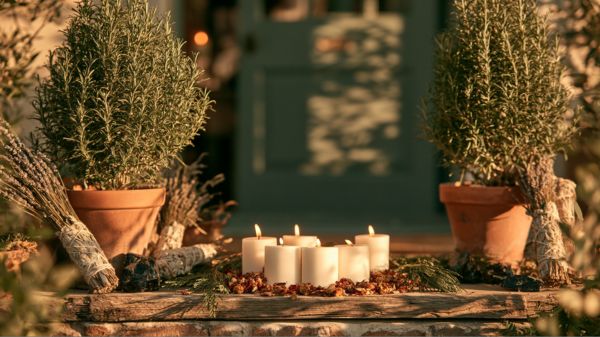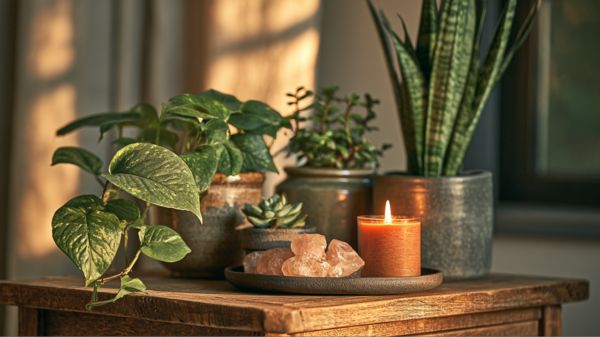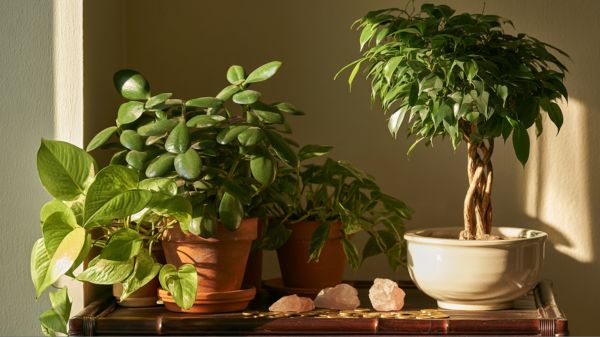


Sacred plant altars represent a structured approach to anxiety management, combining botanical elements with intentional spatial design to create a dedicated mindfulness environment. Research suggests that curated plant arrangements, when paired with consistent meditative practice, may reduce cortisol levels and improve emotional regulation. The selection of specific botanicals, placement principles, and accompanying ritual tools each influence the altar’s overall efficacy. What follows outlines the precise methodology for constructing and maintaining such a space.
Key Takeaways
- Choose calming plants like lavender, chamomile, or passionflower, which contain compounds scientifically shown to reduce anxiety and support meditation.
- Place your altar near an east or north-facing window in a low-traffic area to support plant health and mindful focus.
- Arrange plants using a triangular structure, tallest at back and smallest in front, to create visual hierarchy and psychological calm.
- Use wall-mounted shelves, hanging planters, or ladder stands to maximize limited space while adding layered visual depth.
- Maintain the altar weekly by dusting, checking soil moisture, and removing dead foliage to preserve both plant health and sacred intention.
What Is a Sacred Plant Altar?
A sacred plant altar is a designated space, intentionally curated with living or dried botanicals, symbolic objects, and natural elements, that serves as a focal point for spiritual practice, ritual work, or mindful contemplation.
Rooted in diverse cultural and spiritual traditions, these altars function as physical embodiments of intention, where sacred symbolism informs the selection and arrangement of each element.
The incorporation of plants specifically introduces living energy into the space, connecting practitioners to natural cycles, healing properties, and grounding forces.
Altar aesthetics are not merely decorative considerations; rather, they serve as deliberate compositional choices that reinforce the altar’s intended purpose, whether that purpose centers on anxiety relief, meditation enhancement, or ceremonial observance. The arrangement communicates meaning through form, color, texture, and botanical correspondence.
Why a Plant Altar Helps Calm Anxiety Better Than Plants Alone
While a collection of houseplants may introduce biophilic benefits into a living space, the structured intentionality of a sacred plant altar engages psychological mechanisms that solitary plants cannot activate on their own.
The deliberate arrangement of botanicals within a designated ritual space introduces plant symbolism, which anchors abstract emotional states to concrete, observable forms, facilitating cognitive reappraisal of anxious thought patterns.
Altar mindfulness, practiced through consistent engagement with the altar’s physical elements, reinforces neural pathways associated with parasympathetic nervous system activation.
Unlike passive plant exposure, an altar demands conscious participation, creating a ritualized behavioral loop that conditions the nervous system to associate the space with regulated emotional states.
This structured interaction produces measurable reductions in cortisol levels, distinguishing the altar from a conventional houseplant arrangement in both function and therapeutic outcome.
Choose the Right Location for Your Plant Altar
The placement of a sacred plant altar within a domestic environment directly influences its efficacy as a tool for anxiety regulation, as spatial conditions such as natural light exposure, ambient noise levels, and foot traffic density each affect both plant health and the practitioner’s capacity to engage in sustained mindfulness practice.
Ideal locations prioritize consistent light exposure, ideally near east or north-facing windows, where indirect illumination supports photosynthesis without generating excessive heat.
Airflow balance remains equally critical, as stagnant air fosters fungal pathogens while excessive drafts from ventilation systems or exterior doors desiccate foliage and disrupt the thermal stability that supports meditative focus.
Low-traffic corners, removed from household activity corridors, further reinforce the altar’s function as a designated, psychologically distinct space for intentional anxiety management practice.
The Best Calming Plants for an Anxiety-Relief Altar
Selecting appropriate botanical specimens for an anxiety-relief altar requires consideration of both documented phytotherapeutic properties and the specific sensory conditions each plant contributes to a mindfulness-oriented environment.
Lavender, recognized extensively within ethnobotanical research, demonstrates measurable anxiolytic compounds, particularly linalool, which attenuates cortisol responses.
Chamomile, another widely documented calming herb, contains apigenin, a flavonoid binding directly to benzodiazepine receptors, thereby moderating anxiety responses.
Passionflower, similarly validated through clinical studies, regulates gamma-aminobutyric acid pathways, producing demonstrable sedative effects.
Incorporating these calming herbs alongside sacred symbols, such as deliberately positioned crystals or meaningful figurines, establishes a coherent sensory environment conducive to anxiety reduction. Each specimen selected should reflect verified phytochemical properties, ensuring the altar functions as an evidence-informed, intentional therapeutic space.
Crystals, Candles, and Tools Your Plant Altar Needs
Botanical specimens chosen for their anxiolytic phytochemical profiles establish a functional foundation for the anxiety-relief altar, yet the physical and sensory completeness of such a space depends equally upon the deliberate incorporation of supplementary ritual tools, including crystals, candles, and implements selected for their documented or traditionally attributed properties.
Crystal properties associated with anxiety reduction include amethyst, which practitioners attribute to calming neurological overstimulation, and lepidolite, which contains lithium-bearing mica compounds. Candle colors carry specific vibrational associations, with blue and lavender tones traditionally linked to psychological tranquility and stress reduction.
Additional tools, including a small dish for dried botanicals, an incense holder, and a dedicated offering vessel, complete the altar’s sensory and symbolic architecture, supporting sustained meditative engagement within the designated space.
✨ Take the guesswork out of designing your sacred space.
You have the layout down, but which plants actually hold the energy of wealth, peace, or protection? I’ve compiled the ultimate cheat sheet for you. Download my free eBook, The Sacred Garden: 25 Spiritual Plants for Healing, Protection & Abundance. 👉 Click here to grab your copy and finish your altar.
How to Arrange Your Plant Altar for a Calming Focal Point
Arranging a sacred plant altar for maximum calming effect requires deliberate spatial consideration, wherein the practitioner positions the tallest botanical specimens at the rear of the display surface, creating a graduated visual hierarchy that draws the eye inward and downward toward a defined central focal point.
The plant arrangement should follow a triangular compositional structure, with medium-height specimens flanking each side, while smaller ground-level plants, crystals, and candles occupy the foreground tier.
The focal point, typically a single commanding element such as a meaningful stone, deity figure, or flowering specimen, anchors the entire composition centrally, preventing visual fragmentation.
Symmetrical balance, though not strictly mandatory, reinforces psychological calm, while intentional negative space between elements allows each component adequate visual breathing room, reducing cognitive overwhelm during meditation practice.
Simple Rituals to Begin Using Your Plant Altar
Once the plant altar has been physically established, the practitioner may begin incorporating simple, repeatable rituals that activate the space as a dedicated site of contemplative practice. Each session may open with a brief sensory acknowledgment, in which the practitioner observes the plants’ condition, adjusts lighting, and settles into a chosen seated posture.
Structured meditation techniques, including breath-focused or body-scan methodologies, may then be applied for intervals ranging from five to twenty minutes. Following the meditation component, anxiety journaling serves as a complementary practice, wherein the practitioner records specific stressors, physiological responses, and observed shifts in mental state.
Consistent repetition of this sequence, performed at the same time daily, conditions the nervous system to associate the altar’s environment with regulated, calm physiological states.
Adapt Your Plant Altar for Small Spaces or Apartments
Those with limited living space may find that vertical space maximization, achieved through wall-mounted shelving units, hanging planters, or tiered plant stands, allows for a functional sacred plant altar without consuming valuable floor area.
Compact plant selection, prioritizing slow-growing species such as succulents, air plants, or dwarf varieties of traditional altar herbs, further reduces the spatial footprint of the altar while maintaining its botanical integrity.
Multi-purpose altar surfaces, such as a floating shelf that serves simultaneously as a decorative display and a ritual workspace, provide an efficient solution for apartment dwellers seeking to integrate a sacred plant altar into a constrained environment.
Vertical Space Maximization
Living in a small apartment or working with limited floor space need not preclude the creation of a meaningful and fully functional sacred plant altar, as vertical space, when utilized strategically, offers a substantial and often overlooked resource for altar design. Vertical gardening and space saving techniques allow practitioners to mount shelving units, hanging planters, and wall-mounted displays.
| Vertical Solution | Recommended Plants |
| Wall-mounted shelves | Pothos, ivy |
| Hanging macramé planters | Trailing herbs |
| Ladder-style plant stands | Lavender, rosemary |
| Pegboard display systems | Small succulents |
These configurations enable practitioners to arrange sacred plants at varying heights, creating layered visual depth while maintaining minimal floor footprint, ensuring that spatial constraints do not compromise the altar’s meditative integrity or ceremonial function.
Compact Plant Selection
Selecting appropriately scaled plant specimens represents a foundational consideration for practitioners designing sacred altars within spatially constrained environments, as the botanical choices made at this stage directly determine the altar’s long-term viability and aesthetic coherence.
Compact species selection should prioritize slow-growing, low-maintenance varieties, including miniature succulents, dwarf lavender, and small-form peace lilies, which maintain proportional integrity within limited spatial parameters. Practitioners should evaluate each specimen’s mature dimensions, root expansion requirements, and light tolerances before committing to placement.
Versatile planter options, including stackable terracotta containers, magnetic wall-mounted vessels, and modular geometric holders, enable practitioners to accommodate multiple plant varieties without appreciably expanding the altar’s physical footprint, thereby preserving functional meditation space while maintaining the botanical diversity essential for a meaningful, intentionally curated sacred arrangement.
Multi-Purpose Altar Surfaces
Practitioners operating within spatially constrained residential environments benefit notably from incorporating multi-purpose surfaces into their sacred plant altar designs, as furniture pieces such as floating shelves, windowsills, and narrow console tables serve dual functional roles without requiring dedicated square footage.
Selecting appropriate altar materials, including lightweight wood, reclaimed timber, or tempered glass, guarantees structural integrity while maintaining aesthetic coherence. Decorative accents such as small crystals, candles, and symbolic figurines can be strategically positioned alongside compact plant specimens.
- Floating shelves maximize vertical space while accommodating altar materials effectively.
- Windowsills provide natural light exposure, benefiting plant health considerably.
- Narrow console tables integrate decorative accents without compromising circulation pathways.
These configurations allow practitioners to establish intentional sacred spaces within apartments, supporting consistent meditation practice and anxiety management protocols.
How to Maintain Your Altar and Keep Plants Thriving
Tending a sacred plant altar requires consistent attention to both the spiritual and horticultural needs of the plants, as neglect in either domain can diminish the altar’s overall integrity and purpose. Altar maintenance should follow a structured weekly schedule, incorporating dusting of surfaces, removal of wilted offerings, and rejuvenating of water vessels.
Plant care demands careful monitoring of soil moisture, light exposure, and humidity levels, as each species selected for the altar carries distinct environmental requirements. Dead or yellowing foliage should be promptly removed to prevent bacterial spread among neighboring plants.
Ritual cleansing of the altar space, performed alongside regular horticultural tasks, reinforces intentionality within the practice, ensuring that both the living plants and the sacred environment remain in prime, functional condition.
Plant Altar Mistakes That Quietly Undermine Your Practice
Even the most thoughtfully constructed plant altar can deteriorate in purpose and importance when certain foundational errors go unaddressed, as the cumulative effect of small oversights tends to compromise both the horticultural health of the plants and the spiritual coherence of the space. Common misconceptions about altar maintenance frequently accelerate this decline.
- Overcrowding sacred space with altar distractions, such as unrelated objects, diminishes intentional focus.
- Neglecting species-specific light and water requirements causes gradual plant deterioration.
- Inconsistent engagement with the altar erodes the ritualistic continuity essential to meditative practice.
Practitioners who dismiss these common misconceptions often find their altar distractions multiplying, ultimately severing the contemplative connection the altar was designed to cultivate, rendering the space functionally ineffective.
Need the perfect plants for your new altar? Don’t buy anything until you read The Sacred Garden. Discover the top 25 plants for high-vibe living. Get the free book here.
Frequently Asked Questions
Can I Build a Sacred Plant Altar on a Tight Budget?
One can construct a sacred plant altar utilizing affordable materials, such as reclaimed wood, thrifted fabric, and repurposed containers, thereby minimizing expenditure notably. Budget-friendly plants, including succulents, pothos, and lavender, which require minimal maintenance while offering meditative properties, can be sourced from local nurseries or propagated from cuttings. Strategic resource allocation, prioritizing essential components, guarantees a functional, aesthetically cohesive altar without exceeding financial constraints.
Are There Plants I Should Avoid Placing on a Meditation Altar?
While some may argue all plants carry sacred energy, plant toxicity remains a critical consideration. One should avoid placing toxic species, such as oleander or datura, on a meditation altar, as their harmful properties contradict the altar’s healing intent. Additionally, plants lacking positive spiritual symbolism, or those associated with negative energies in various traditions, such as certain nightshades, should be carefully reconsidered before inclusion.
How Long Does It Typically Take to Feel Altar Benefits?
The altar benefits timeline varies considerably, as personal meditation experiences differ among practitioners. Some individuals report subtle shifts in focus and anxiety reduction within the first few sessions, typically spanning one to two weeks, while others require consistent daily practice over thirty to sixty days before measurable psychological effects manifest. Variables including session duration, plant selection, environmental consistency, and the practitioner’s baseline stress levels collectively influence the rate at which benefits are perceived.
Can Children or Pets Safely Interact With a Sacred Plant Altar?
Safe interaction between children, pets, and a sacred plant altar requires careful altar design considerations, as certain botanicals commonly incorporated — such as eucalyptus, lavender, or sage — may present toxicity risks to animals and small children if ingested. Practitioners should position the altar at an elevated, inaccessible location, audit all plant species for documented toxicological profiles, and implement physical barriers where necessary to mitigate unintended exposure.
Should My Plant Altar Reflect a Specific Spiritual or Religious Tradition?
A plant altar need not reflect a specific spiritual or religious tradition, as its spiritual significance is ultimately personal, determined by the practitioner’s own beliefs and intentions. Altar symbolism may draw from established traditions, such as Buddhism, paganism, or indigenous practices, or remain entirely secular, functioning purely as a mindfulness tool. The practitioner retains full authority in curating meaningful symbolic elements aligned with their individual values, cultural background, and meditation objectives.
Conclusion
A sacred plant altar, when assembled with intention and maintained with consistency, offers practitioners a structured environment in which mindfulness and anxiety relief may be cultivated daily. Can any single wellness practice claim to integrate the sensory, psychological, and botanical dimensions of healing as cohesively? The altar’s efficacy depends entirely upon the practitioner’s commitment to both plant care and ritual engagement, transforming an otherwise ordinary space into a purposeful, restorative sanctuary.